

Science without religion is lame, religion without science is blind.
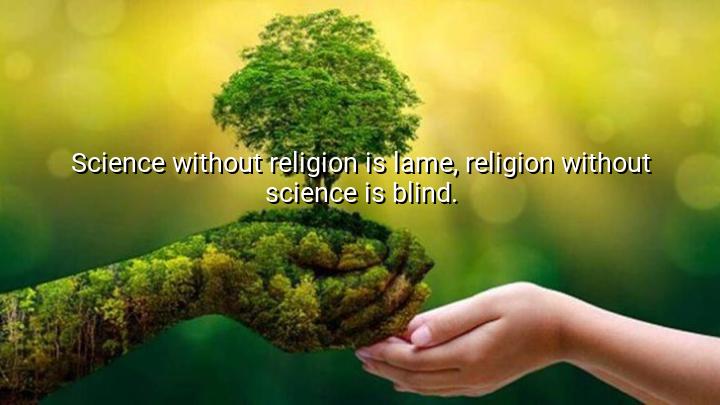




Albert Einstein’s quote, “Science without religion is lame, religion without science is blind,” reflects his belief in the interconnectedness of reason and faith. Einstein, a brilliant theoretical physicist, is often associated with the rational and empirical world of science, yet he also expressed deep admiration for religious and spiritual concepts. In this quote, Einstein suggests that while science provides the tools to explore and understand the natural world through observation, experimentation, and logic, it cannot fully explain the meaning or purpose of life without religion. Religion, on the other hand, provides moral and ethical guidance, but it must be informed by the critical thinking and understanding that science offers.
The idea that science without religion is "lame" suggests that reason alone is insufficient to answer the deeper questions about human existence, purpose, and morality. For Einstein, science helps explain how things work but cannot provide answers to why we exist or the ultimate purpose of life. Without religion, which offers a framework for values, meaning, and spiritual fulfillment, science risks becoming limited to mere facts and figures without a sense of broader significance.
On the other hand, Einstein’s assertion that religion without science is "blind" implies that faith alone, without the critical insight and understanding that science provides, can lead to misconceptions or a lack of understanding of the world. Religious belief must be open to questioning and inquiry, just as science must respect the moral and ethical dimensions of life. Einstein was a proponent of humility, urging that both science and religion should complement each other, guiding individuals toward a more holistic view of existence.
Ultimately, this quote encapsulates Einstein’s vision of a balanced approach to life, where both reason and faith work together to provide a fuller, more profound understanding of the world and our place in it. By recognizing the contributions of both, one can achieve a deeper sense of truth—both in the empirical world and in the realm of spiritual and moral values.

AAdministratorAdministrator
Welcome, honored guests. Please leave a comment, we will respond soon