

Revenge by young men is considered gain, even at the cost of their own lives, but old men who stay at home in times of war, and mothers who have sons to lose, know better.
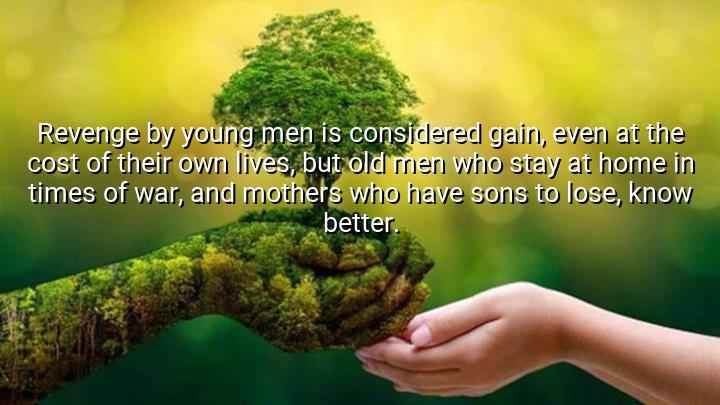




In this quote, Chief Seattle, a prominent Native American leader, contrasts the perspectives of young men and older individuals on the concept of revenge and war. He suggests that young men, driven by youthful impulsiveness and a desire for honor or revenge, may view going to war as a gain, even if it leads to the ultimate cost of their own lives. The passion and idealism of youth often make them more willing to risk everything in the heat of battle, seeing it as a means of proving themselves or avenging wrongs.
However, Chief Seattle contrasts this with the wisdom and experience of older men and mothers, who understand the devastating cost of war from a more personal and grounded perspective. Older men, who have likely experienced the losses and tragedies of war, are less likely to romanticize violence or revenge. Similarly, mothers, who stand to lose their sons in battle, have a much clearer understanding of the true cost of conflict. For them, the loss of life is not an abstract concept but a personal, emotional reality.
The quote speaks to the inherent wisdom that comes with age and experience. While younger generations may be driven by a desire for revenge or glory, those who have seen the long-lasting effects of war, either through personal loss or cultural trauma, recognize that peace and preservation are far more valuable than vengeance. Chief Seattle’s words convey a message of caution, urging a deeper understanding of the true human cost of conflict.
The origin of this quote is deeply rooted in Chief Seattle’s life as a leader of the Suquamish and Duwamish tribes in the Pacific Northwest. He was known for his wisdom and eloquent speeches, many of which emphasized peace, nature, and the preservation of his people’s way of life. His reflections on war and its consequences reveal his deep concern for the well-being of his people, highlighting the difference between youthful impulsiveness and the more measured judgment that comes with age and experience.

AAdministratorAdministrator
Welcome, honored guests. Please leave a comment, we will respond soon