

Religion promotes the divine discontent within oneself, so that one tries to make oneself a better person and draw oneself closer to God.
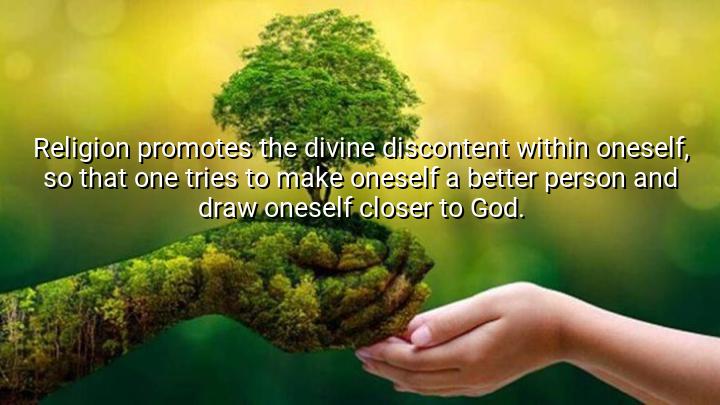




The quote by Cyril Cusack highlights the role of religion in fostering a sense of divine discontent within an individual. This concept refers to the inner feeling that one is not yet fully aligned with the moral and spiritual ideals they aspire to. According to Cusack, this sense of discontent is not meant to cause despair but rather acts as a motivating force, pushing individuals to seek personal improvement and a deeper connection with God. It emphasizes that true spiritual growth comes from recognizing one’s own imperfections and striving to transcend them.
The origin of this idea is rooted in many religious traditions, which often teach that humans are inherently flawed yet capable of transcendence through self-reflection, discipline, and devotion. Cusack’s phrasing underscores the notion that faith is not simply a set of rules to follow but a dynamic process of self-examination and moral development. By framing discontent as divine, the quote suggests that this inner tension is not accidental but a deliberate mechanism designed by the divine to guide humans toward virtue and spiritual maturity.
In essence, the quote presents religion as a transformative tool. The divine discontent it generates encourages individuals to engage in introspection and act ethically, aiming to better themselves and, in doing so, draw closer to God. It portrays a relationship between humans and the divine that is interactive, where faith inspires ongoing self-improvement rather than mere adherence to tradition.
Ultimately, Cusack’s words serve as a reminder that the purpose of religion extends beyond comfort or ritual. By nurturing a sense of divine discontent, it motivates a moral journey—one where striving for personal betterment and cultivating a closer connection with the divine are central goals. It emphasizes that growth, both spiritual and ethical, is driven by the recognition of one’s own limitations and the desire to align with higher ideals.
If you want, I can also create an even shorter, more concise version suitable for quick reflection or social media. Do you want me to do that?

AAdministratorAdministrator
Welcome, honored guests. Please leave a comment, we will respond soon