

Religion brings to man an inner strength, spiritual light, and ineffable peace.
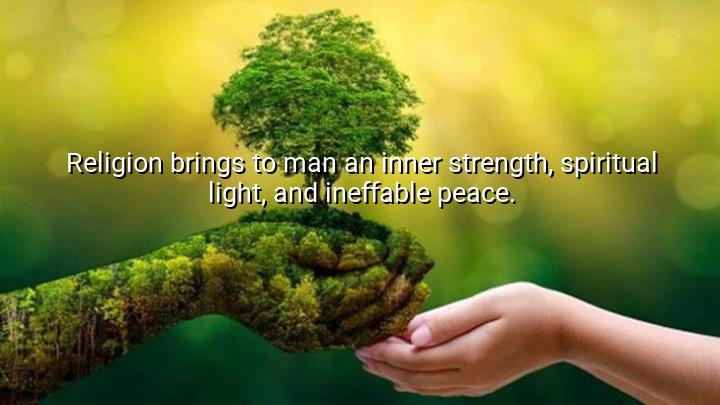




In this quote, Alexis Carrel speaks to the profound spiritual benefits that religion can offer individuals. He suggests that religion provides not only a sense of inner strength but also spiritual light and an ineffable peace—a peace that cannot be fully described or understood by words alone. The idea is that religion acts as a guiding force that helps people tap into something greater than themselves, fostering a sense of purpose, stability, and calm amidst life's challenges. For Carrel, religion is more than just a set of beliefs or practices; it is a source of deep, personal transformation.
The terms "inner strength," "spiritual light," and "ineffable peace" reflect the intangible yet powerful effects that faith and religious devotion can have on an individual’s emotional and mental state. Inner strength speaks to the resilience that comes from a sense of connection to a higher power, while spiritual light represents clarity, insight, and direction gained through religious practice. Ineffable peace, meaning a peace beyond words, alludes to a transcendent sense of calm and comfort that individuals often experience when deeply connected to their faith. This peace isn't easily explained, but it provides solace in difficult times.
Carrel's perspective aligns with his broader views on the importance of spiritual and scientific balance. While he was a medical doctor and scientist, Carrel was also a devout believer in the healing and transformative powers of religion. In his works, such as Man, the Unknown, he argued that the spiritual aspect of human nature cannot be ignored in the pursuit of true well-being. He believed that science and religion should not be seen as opposing forces but as complementary elements of a fuller understanding of the human experience.
The origin of this quote comes from Carrel’s recognition of the limits of scientific reasoning when it comes to matters of the human soul and spiritual fulfillment. Though Carrel was highly regarded for his work in medicine, he also saw religion as an essential component of human health and harmony. His views reflect a deep belief that the spiritual aspect of life contributes to mental health and emotional well-being, offering people a source of peace and strength that cannot be replicated through purely rational or material means.

AAdministratorAdministrator
Welcome, honored guests. Please leave a comment, we will respond soon