

Reality is how we interpret it. Imagination and volition play a part in that interpretation. Which means that all reality is to some extent a fiction.
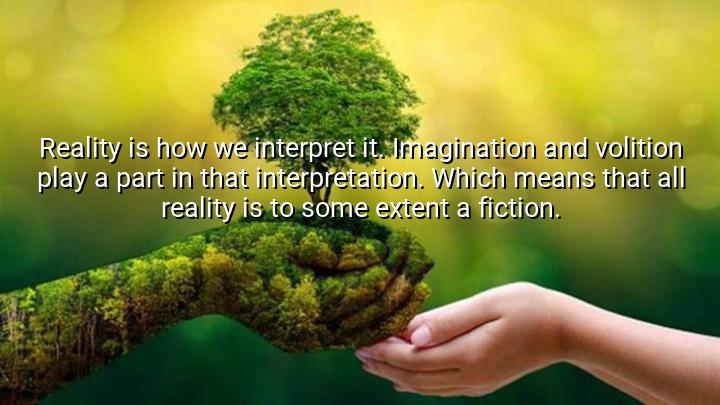




The quote, "Reality is how we interpret it. Imagination and volition play a part in that interpretation. Which means that all reality is to some extent a fiction," comes from Yann Martel, a Canadian author best known for his novel Life of Pi. In this statement, Martel explores the idea that reality is not something absolute or fixed, but rather something subjective and shaped by interpretation. He suggests that what we perceive as reality is influenced by both imagination and volition—our ability to choose how we see and respond to the world.
Martel's reference to imagination and volition highlights the role of the mind in constructing our experience of reality. Imagination allows us to visualize possibilities beyond the present moment, while volition—our will or choice—shapes how we react to and engage with the world. Together, these forces create a version of reality that may differ from person to person, depending on their unique perspective and mental faculties.
The statement that "all reality is to some extent a fiction" challenges the traditional view that reality is simply what is physically and universally true. Instead, Martel suggests that reality is a fluid construct, shaped by individual perception and beliefs. In this sense, the line between what is real and what is fiction becomes blurred, as the imaginative and willful elements of human experience help create the world we live in.
Ultimately, this quote reflects Martel’s philosophical view on the nature of reality—that it is not an objective, unchanging truth but a dynamic, subjective experience. The idea that imagination and volition play a significant role in shaping our understanding of the world invites us to recognize that our personal experiences, stories, and interpretations are just as influential in shaping reality as any physical fact.

AAdministratorAdministrator
Welcome, honored guests. Please leave a comment, we will respond soon