

Real happiness is cheap enough, yet how dearly we pay for its counterfeit.
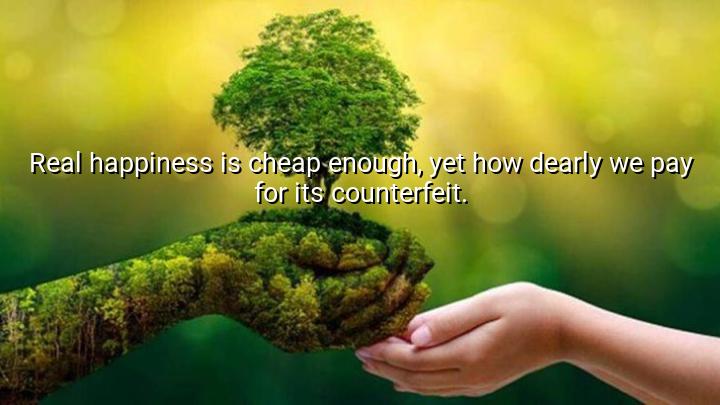




The quote "Real happiness is cheap enough, yet how dearly we pay for its counterfeit." by Hosea Ballou suggests that true happiness is simple and accessible, but people often seek false or superficial forms of joy, which come at a much higher cost. Ballou contrasts the simplicity of genuine happiness, which can be found in everyday moments and authentic connections, with the false happiness people chase, which often involves pursuing materialistic or external rewards that may bring temporary pleasure but ultimately lead to emptiness or dissatisfaction.
Ballou's statement also reflects on the illusion of happiness offered by society, where people may believe that wealth, status, or possessions will bring them lasting fulfillment. In reality, these things can be transient and often require a great deal of effort, sacrifice, and emotional toll to attain, leaving individuals with a sense of hollowness once the initial excitement fades. The quote serves as a reminder that genuine happiness does not require extravagant means; it comes from simpler, more meaningful aspects of life, such as relationships, self-acceptance, and inner peace.
The cost of counterfeit happiness, as Ballou puts it, is not only monetary but also emotional and psychological. The chase for superficial satisfaction often leads to stress, discontent, and a sense of loss because it does not address the deeper emotional needs of the individual. True happiness, on the other hand, is not about accumulating more, but about finding contentment with what one already has and nurturing a mindset of gratitude and well-being.
Originating from Hosea Ballou, a prominent 19th-century Universalist minister and theologian, the quote reflects his views on spirituality and the pursuit of happiness through faith and inner peace. Ballou believed that true happiness comes from within and is rooted in living a moral, simple, and honest life. His work focused on the idea that self-realization and spiritual well-being are more important than material success or external validation, which is reflected in this quote.

AAdministratorAdministrator
Welcome, honored guests. Please leave a comment, we will respond soon