

Disease is the retribution of outraged Nature.
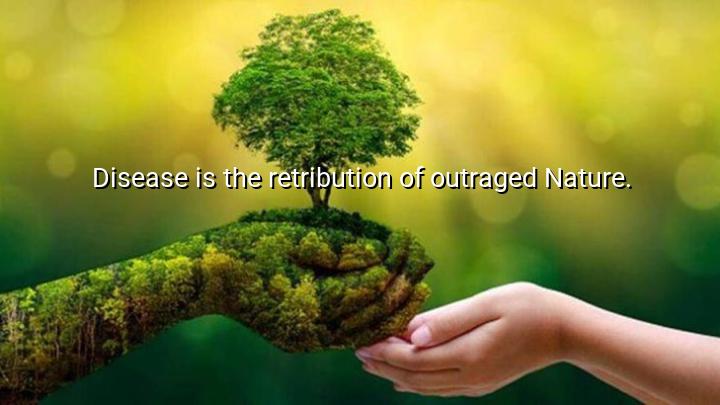




Hosea Ballou’s quote, "Disease is the retribution of outraged Nature," reflects a philosophical and moral view on the relationship between human behavior and health. Ballou, a 19th-century theologian and Universalist minister, suggests that disease is not just a random occurrence but a form of punishment or consequence for actions that violate the natural order or harm the environment. The word retribution implies a kind of justice or payback, where the suffering caused by illness is seen as a reaction to human actions that disrespect or neglect the balance of nature.
In this context, Nature is not only the natural world but also represents the fundamental laws that govern life and health. Ballou’s quote implies that humans, through actions like pollution, exploitation of resources, or disregard for the environment, might upset the natural harmony, resulting in disease as a form of correction or balancing force. The idea of retribution suggests that disease is a natural consequence of these disruptions, and rather than being an entirely random or inexplicable event, it is a reflection of humanity's relationship with the world around them.
The origin of this thought aligns with the broader 19th-century focus on moral causality—the idea that actions have moral and physical consequences. During this time, many religious and philosophical thinkers, including Ballou, were exploring the connection between spirituality and physical health, often suggesting that illness could be a result of moral failings or improper behavior. Ballou's quote reflects a belief that humans are accountable not just for their individual actions, but also for the larger impact they have on the earth and society.
Ultimately, Ballou’s quote is a reminder of the interconnectedness between human actions and the natural world. It suggests that when humanity disrupts the natural balance, whether through sinful behavior or thoughtless exploitation of resources, the resulting disease is a form of correction. While his view may seem somewhat fatalistic by modern standards, it reflects a view of the world where health and wellness are deeply tied to respect for nature and moral living.

AAdministratorAdministrator
Welcome, honored guests. Please leave a comment, we will respond soon