

Poetry proceeds from the totality of man, sense, imagination, intellect, love, desire, instinct, blood and spirit together.
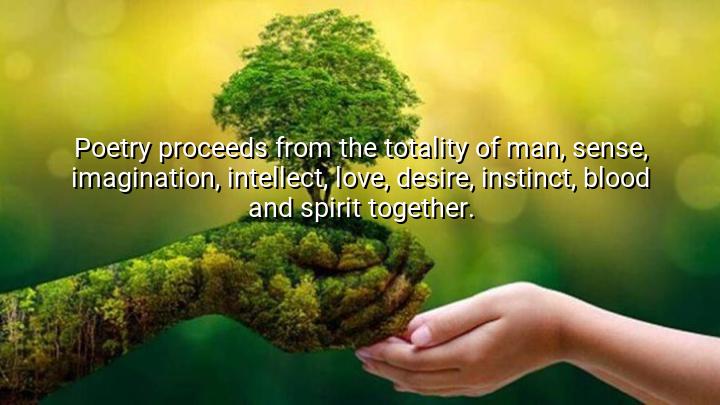




In the quote, "Poetry proceeds from the totality of man, sense, imagination, intellect, love, desire, instinct, blood, and spirit together," Jacques Maritain explores the idea that poetry is a product of the whole human experience. He suggests that poetry does not arise from one single aspect of a person, but from the full range of human faculties—rational thought, emotions, physical instincts, and spiritual depth. Poetry is seen as a unifying force that draws from both the material and immaterial aspects of human life, capturing the complexity and depth of existence.
Maritain’s emphasis on imagination and intellect points to poetry’s ability to transcend ordinary experiences by elevating the senses and thought into something meaningful and artistic. He also includes love, desire, and instinct, acknowledging that poetry can tap into primal emotions and urges that speak to the core of human nature. The mention of blood and spirit highlights the connection between the body and soul, suggesting that poetry reflects both our physical existence and our higher aspirations, creating a holistic form of expression.
By including all of these elements, Maritain paints a picture of poetry as a deeply integrated art form that is not confined to intellectual or emotional boundaries. Poetry requires the engagement of the entire being, offering a comprehensive reflection of life’s joys, struggles, passions, and mysteries. This idea aligns with Maritain’s broader philosophical belief in the interconnectedness of various aspects of human existence, where true artistry arises from the integration of mind, body, and spirit.
The origin of this quote lies in Maritain’s work as a philosopher, particularly his writings on art and aesthetics. As a key figure in the 20th-century intellectual movement, Maritain believed that art, especially poetry, should reflect the fullness of human experience. His views on the nature of poetry emphasize its profound ability to encapsulate both the intellectual and emotional aspects of the human condition, offering a bridge between the material world and the deeper, often ineffable aspects of life.

AAdministratorAdministrator
Welcome, honored guests. Please leave a comment, we will respond soon