

Poetry and beauty are always making peace. When you read something beautiful you find coexistence; it breaks walls down.
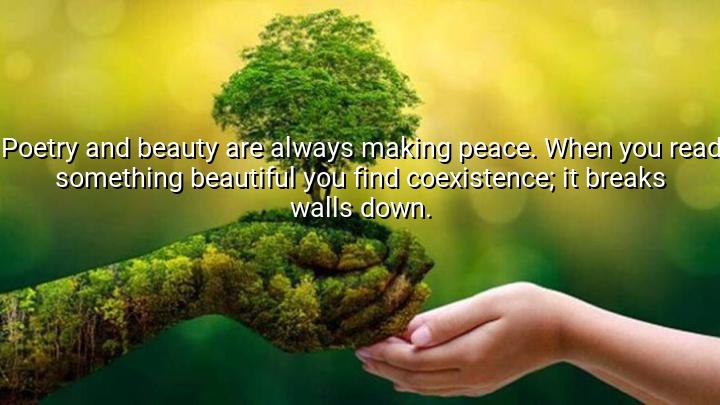




The quote by Mahmoud Darwish, "Poetry and beauty are always making peace. When you read something beautiful you find coexistence; it breaks walls down," reflects Darwish’s view on the transformative power of poetry and beauty. As a Palestinian poet, Darwish often explored themes of exile, identity, and conflict, and here he suggests that poetry and beauty have the unique ability to foster understanding and unity. The act of engaging with something beautiful, whether through words or art, has the power to transcend division and create a sense of connection among people.
Darwish emphasizes that beauty and poetry are not just artistic expressions but active forces that work towards reconciliation and coexistence. The phrase "making peace" suggests that poetry and beauty can serve as tools for healing and overcoming barriers—whether they are physical, cultural, or emotional. When one encounters beauty, it has the ability to soften hearts, opening the mind to ideas and perspectives that might have previously been blocked by prejudice or hatred.
The idea that beauty "breaks walls down" underscores the universality of the experience of beauty and poetry. No matter the cultural or political context, beauty has the potential to move people beyond their divisions and allow them to see the humanity in others. By bringing people together through shared appreciation, poetry and beauty create common ground, encouraging empathy and mutual respect.
Ultimately, Darwish’s quote speaks to the healing and unifying power of poetry and beauty. In a world often divided by conflict and misunderstanding, these artistic expressions offer a space for peace and connection. By embracing beauty, individuals can break down the walls that separate them, fostering a sense of shared experience and collective peace.

AAdministratorAdministrator
Welcome, honored guests. Please leave a comment, we will respond soon