

Perspective is not a science but a hope.
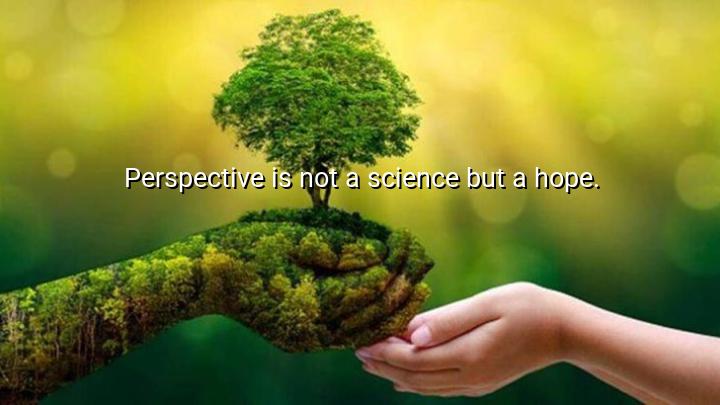




John Berger’s quote, "Perspective is not a science but a hope," reflects his belief in the subjective nature of how people perceive the world. Berger, an art critic, theorist, and painter, often explored the relationship between vision, art, and the way we interpret reality. In this quote, he suggests that perspective—the way we view and interpret things—is not an exact or fixed science but something shaped by our desires, hopes, and personal experiences. It’s fluid, dynamic, and deeply influenced by the individual’s emotional and cultural context.
The distinction between science and hope in the quote underscores Berger's critique of the idea that perspective is objective or universally applicable. While science aims to define and measure with precision, hope is more abstract and personal, representing an idealized way of seeing or understanding the world. This suggests that our perceptions are often driven by personal aspirations and emotional states, rather than being based purely on objective fact or reason.
Berger’s perspective on art and perspective was shaped by his belief that the way we view the world is often influenced by external forces, such as culture and society. In his work, he argued that visual perception is never neutral, but always colored by bias, context, and the historical moment in which one exists. By comparing perspective to hope, Berger highlights how our interpretations of the world are often influenced by what we wish to see or believe, rather than what is factually present.
In essence, Berger’s quote suggests that perspective is not a rigid framework, but a fluid, personal experience that is shaped by our innermost hopes and desires. This view challenges the conventional notion of perspective as something purely analytical or scientific, urging a deeper reflection on how our subjective experiences shape the way we interpret the world around us.

AAdministratorAdministrator
Welcome, honored guests. Please leave a comment, we will respond soon