

Perhaps the surest test of an individual's integrity is his refusal to do or say anything that would damage his self-respect.
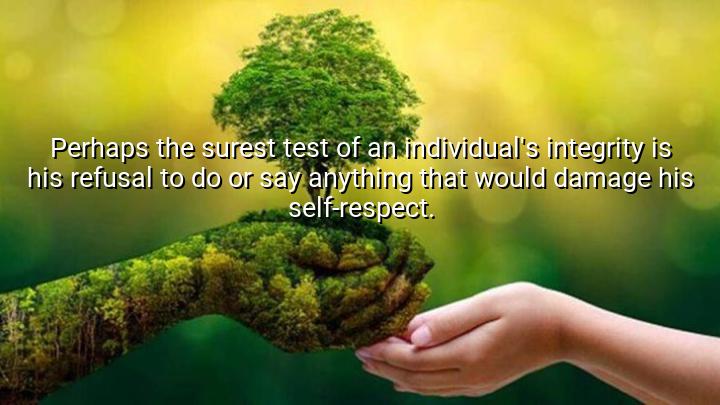




The quote, "Perhaps the surest test of an individual's integrity is his refusal to do or say anything that would damage his self-respect," emphasizes the deep connection between integrity and self-respect. Thomas S. Monson, a respected religious leader and author, highlights that true ethical character is not only about how one treats others but also about maintaining a personal standard of honesty and moral courage. An individual of integrity will avoid actions or words that compromise their sense of dignity and internal moral compass.
The origin of this quote lies in Monson’s lifelong commitment to ethical living and leadership. As the President of The Church of Jesus Christ of Latter-day Saints, he frequently spoke about principles such as truthfulness, honor, and personal accountability. This statement reflects his belief that integrity is tested not in grand public gestures but in everyday choices—those moments when a person could act against their values but chooses to uphold them instead.
At its core, the quote teaches that self-respect acts as both a guide and a safeguard for moral behavior. When individuals refuse to compromise their principles, they reinforce their own sense of worth and contribute to a trustworthy and honorable society. Integrity, therefore, is not just about external perception but about inner consistency between one’s beliefs and actions.
Ultimately, Monson’s words serve as a reminder that living with integrity requires courage, self-awareness, and discipline. By prioritizing self-respect and refusing to act in ways that diminish it, a person not only maintains their moral character but also sets a positive example for others, fostering trust, respect, and ethical influence in their community.

AAdministratorAdministrator
Welcome, honored guests. Please leave a comment, we will respond soon