

Pain is the mind. It's the thoughts of the mind. Then I get rid of the thoughts, and I get in my witness, which is down in my spiritual heart. The witness that witnesses being. Then those particular thoughts that are painful - love them. I love them to death!
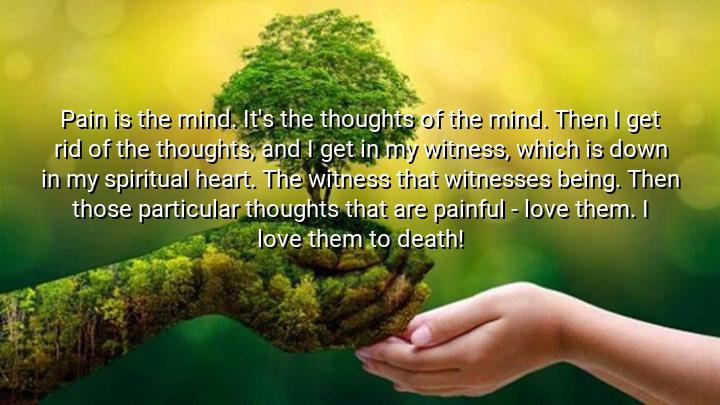




The quote by Ram Dass delves into the relationship between pain and thoughts. According to him, pain is not merely a physical sensation, but a creation of the mind. It's the mental narratives and thoughts that amplify pain, making it feel more overwhelming than it might be in the moment. Ram Dass teaches that when we identify these thoughts as the source of suffering, we can begin to shift our perception and stop identifying with them.
The key to transforming pain, as Ram Dass suggests, lies in connecting with the witness—the part of us that is not caught in the cycle of thoughts or emotions. This witness resides in the spiritual heart, an intuitive, peaceful center beyond the mind's chatter. By cultivating awareness and detaching from painful thoughts, we can tap into this higher state of consciousness that sees beyond pain and suffering.
Instead of resisting painful thoughts, Ram Dass encourages us to love them. He advocates for a radical approach of accepting even the most difficult emotions, inviting them in with compassion. By loving them "to death," we let go of their power over us. This doesn't mean ignoring the pain, but rather allowing it to transform into something that no longer controls us.
Originating from Ram Dass's teachings on spirituality and mindfulness, this quote is rooted in Eastern philosophies, especially Buddhism and Hinduism. These traditions emphasize the power of detachment and mindfulness in overcoming suffering, focusing on the importance of being a witness to our thoughts and emotions rather than identifying with them.

AAdministratorAdministrator
Welcome, honored guests. Please leave a comment, we will respond soon