

One's eyes are what one is, one's mouth is what one becomes.
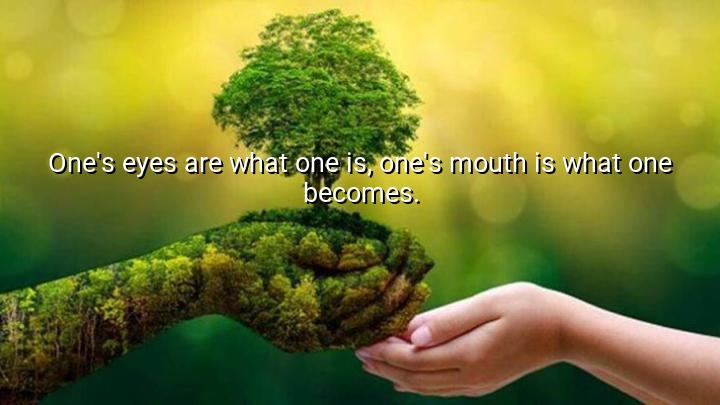




The quote "One's eyes are what one is, one's mouth is what one becomes." by John Galsworthy explores the relationship between inner identity and outward expression, drawing a contrast between what is inherently within a person and how they shape their future through communication. Galsworthy, a British novelist and playwright best known for The Forsyte Saga, often wrote about the complexities of human character and social transformation. This quote reflects his nuanced understanding of how personality and destiny are both revealed and constructed.
The phrase "one's eyes are what one is" suggests that the eyes, often called the windows to the soul, reflect a person's true nature, emotions, and internal world. Eyes are passive and revealing—they don't lie easily and often disclose one's authentic self. In contrast, "one's mouth is what one becomes" shifts focus to speech and action, implying that through what we say, we define or even transform ourselves. The mouth, in this context, becomes a tool of self-determination, shaping identity over time.
This contrast points to the idea that while we are born with certain traits (the "eyes"), we also have the power to evolve through our words and interactions (the "mouth"). Galsworthy seems to suggest that character is both inherited and earned—we are partly what we are born as, and partly what we communicate and choose to become. What we say has lasting impact, both on ourselves and on how others perceive and respond to us.
Ultimately, Galsworthy’s quote is a poetic reminder of the dual nature of identity: the static truth of who we are inside, and the dynamic process of who we grow into through our expression, decisions, and voice. It invites reflection on how much of our fate is tied not only to our inner world but also to what we choose to share and project outward.

AAdministratorAdministrator
Welcome, honored guests. Please leave a comment, we will respond soon