

One test of the correctness of educational procedure is the happiness of the child.
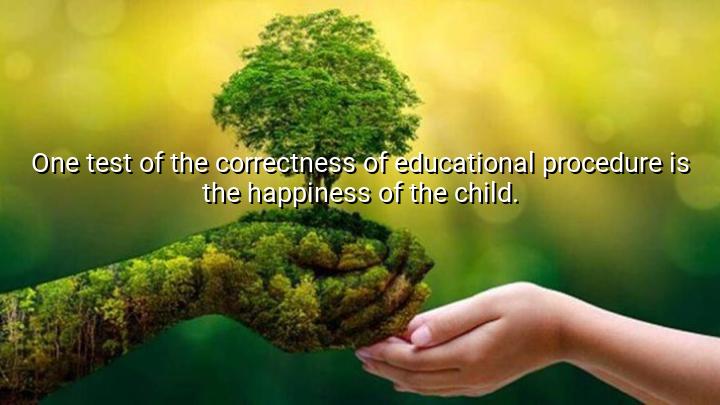




The quote by Maria Montessori — "One test of the correctness of educational procedure is the happiness of the child" — emphasizes the idea that the effectiveness of an educational method can be measured by the well-being and happiness of the child engaged in it. Montessori, an Italian physician and educator, is best known for developing the Montessori method, which focuses on self-directed activity, hands-on learning, and collaborative play. She believed that if children are truly engaged in their learning process and experiencing joy, then the educational approach is likely successful.
Montessori's approach to education prioritized the emotional and social development of children, recognizing that happiness is essential for fostering a positive and productive learning environment. For her, happiness in the classroom wasn’t just about fun or entertainment, but about the child’s sense of purpose, curiosity, and empowerment. When children feel happy and motivated, they are more likely to thrive and develop the skills necessary for lifelong learning and success.
The quote also suggests that happiness is a key indicator of whether the educational process aligns with the child’s needs and natural development. If the child is unhappy, frustrated, or disengaged, it may indicate that the teaching methods or the learning environment need to be adjusted. Montessori believed that children should be encouraged to explore and learn at their own pace, in an environment that supports their emotional and intellectual growth, which in turn leads to happiness.
In essence, Montessori's quote reflects her holistic view of education, where happiness is not a byproduct but a central goal of teaching. It serves as a reminder that the ultimate measure of an educational method’s success is not just academic achievement but the overall happiness and well-being of the child. Happiness in education, according to Montessori, signifies a healthy, fulfilling learning experience that nurtures both intellectual and emotional growth.

AAdministratorAdministrator
Welcome, honored guests. Please leave a comment, we will respond soon