

One is never fortunate or as unfortunate as one imagines.
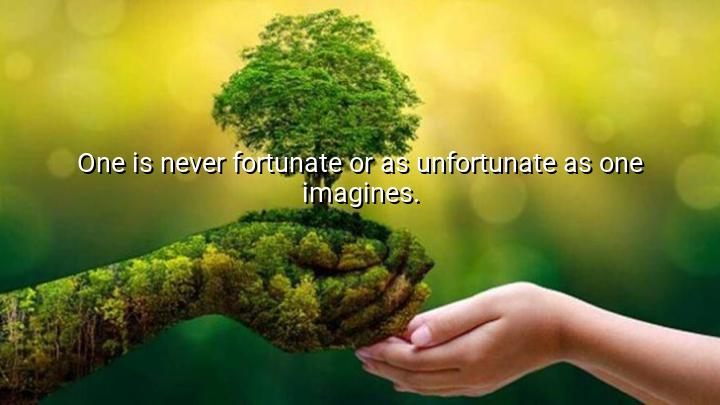




The quote "One is never fortunate or as unfortunate as one imagines" by Francois de La Rochefoucauld speaks to the gap between perception and reality. La Rochefoucauld, a French moralist known for his sharp insights into human nature, suggests that our emotions and expectations often distort how we perceive our circumstances. We tend to magnify both our good and bad situations, either by exaggerating our misfortunes or overestimating our luck and success.
The quote highlights the role of subjectivity in shaping our views of the world. We often believe that we are either incredibly fortunate or deeply unfortunate, but La Rochefoucauld argues that these perceptions are rarely accurate. In reality, our circumstances tend to be more neutral or less extreme than we imagine them to be. This message encourages a more grounded and realistic view of life, urging us not to be overwhelmed by emotions or assumptions.
La Rochefoucauld's words also emphasize how self-awareness and reflection can help us gain a clearer understanding of our situations. By acknowledging that our perceptions are often clouded by personal biases, we can gain a more balanced perspective on life. This understanding can lead to greater resilience in the face of challenges and a more humble approach to success.
Originating from Francois de La Rochefoucauld, a French philosopher and writer of the 17th century, this quote reflects his broader focus on the complexities of human behavior. La Rochefoucauld's maxims often explored the contradictions and illusions present in everyday life, and this quote serves as a reminder that our minds frequently deceive us into thinking our experiences are more dramatic or extreme than they truly are.

AAdministratorAdministrator
Welcome, honored guests. Please leave a comment, we will respond soon