

Oh eyes, no eyes, but fountains fraught with tears; O life, no life, but lively form of death; Oh world, no world, but mass of public wrongs.
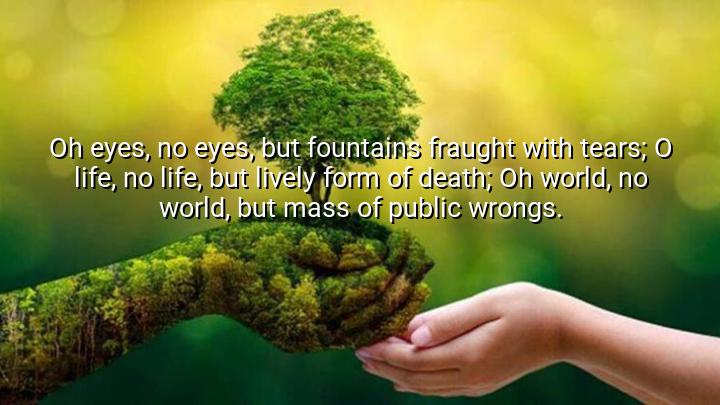




Thomas Kyd’s quote, "Oh eyes, no eyes, but fountains fraught with tears; O life, no life, but lively form of death; Oh world, no world, but mass of public wrongs," comes from his renowned play The Spanish Tragedy. Kyd uses this expressive and dramatic language to convey a sense of overwhelming grief, suffering, and disillusionment with the world. Each phrase contrasts the normal state of human existence with its distorted, painful counterpart, reflecting a deep sense of loss and despair.
In the first part, "Oh eyes, no eyes, but fountains fraught with tears," Kyd evokes the image of eyes that should be filled with sight and vision, yet are instead overflowing with sorrow. The eyes become metaphorical fountains, representing endless grief and the inability to see or understand clearly due to overwhelming emotion. This sets the tone for the rest of the quote, emphasizing the suffering of the character and the emotional turmoil that clouds their perception of reality.
The second line, "O life, no life, but lively form of death," reflects a feeling of existential despair, where life itself is seen as a pale imitation of true living. Kyd contrasts life with a "form of death," suggesting that what appears to be life is actually hollow and filled with meaninglessness, much like a zombie-like existence that lacks purpose or vitality. This line portrays the speaker’s internal suffering, where life no longer holds the meaning it once did.
Finally, "Oh world, no world, but mass of public wrongs," conveys the notion that the world is corrupted and filled with injustice, where societal structures are based on wrongdoing rather than fairness or truth. The world is reduced to a chaotic and unjust place, where the pain and suffering of individuals are ignored or exacerbated by public failings. Kyd’s words capture the bleakness of the human condition, emphasizing the hopelessness and the emotional void that permeate both personal and societal realms.
In essence, this quote from The Spanish Tragedy reflects Kyd’s use of powerful imagery to express a deep sense of grief, disillusionment, and the moral decay of both individuals and society. Through these contrasts, Kyd explores themes of suffering and the perception of life and the world as corrupted and tragic, painting a stark picture of the despair his characters feel.

AAdministratorAdministrator
Welcome, honored guests. Please leave a comment, we will respond soon