

Nothing great is created suddenly, any more than a bunch of grapes or a fig. If you tell me that you desire a fig. I answer you that there must be time. Let it first blossom, then bear fruit, then ripen.
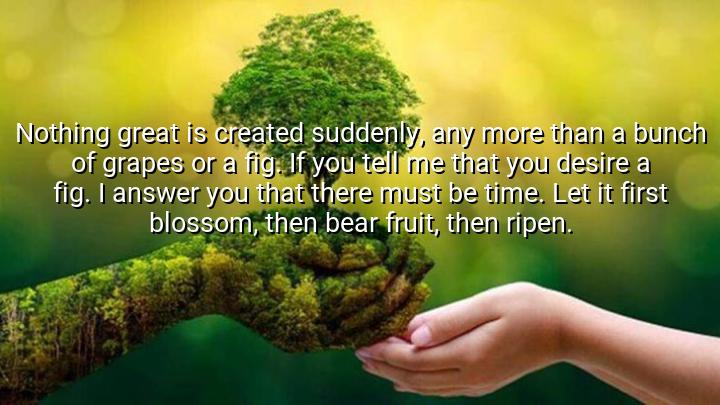




The quote "Nothing great is created suddenly, any more than a bunch of grapes or a fig. If you tell me that you desire a fig, I answer you that there must be time. Let it first blossom, then bear fruit, then ripen" is attributed to the ancient Greek philosopher Epictetus, who is known for his teachings on stoicism and the importance of patience and self-discipline. In this quote, Epictetus draws a parallel between the growth of a fruit and the process of achieving something great in life.
Epictetus is emphasizing that the process of achieving greatness is not immediate and requires time and effort. Just like a fig or a bunch of grapes needs to go through stages of blossoming, bearing fruit, and eventually ripening, the same applies to personal growth, success, or any great accomplishment. This highlights the importance of patience and perseverance in the journey toward achieving meaningful goals, as things of value are rarely the result of instant gratification.
The quote encourages individuals to recognize that progress takes time and that rushing toward the end result often leads to disappointment or incomplete outcomes. It also implies that each stage of growth, whether it's the blossoming, the formation of the fruit, or the final ripening, is necessary for the ultimate success or fulfillment. Epictetus' wisdom reflects the stoic belief that we should focus on what we can control, embrace the process, and not get discouraged by delays.
Epictetus’ message is timeless, urging people to embrace the process of growth, whether it relates to personal development, career goals, or creative endeavors. The quote reminds us that great things are the product of consistent effort and gradual development, and that rushing the journey undermines its long-term value.

AAdministratorAdministrator
Welcome, honored guests. Please leave a comment, we will respond soon