

None speak of the bravery, the might, or the intellect of Jesus; but the devil is always imagined as a being of acute intellect, political cunning, and the fiercest courage. These universal and instinctive tendencies of the human mind reveal much.
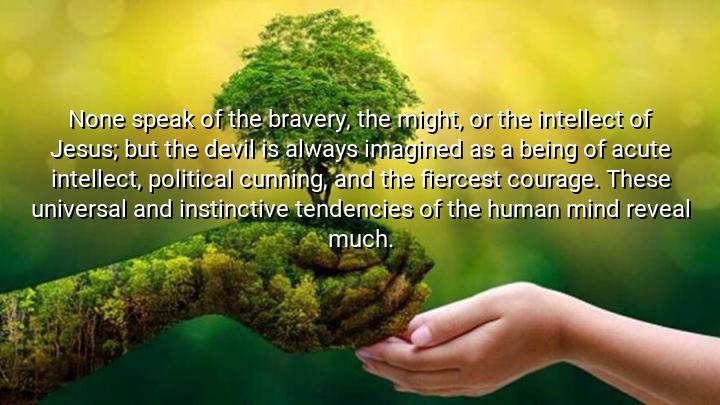




The quote "None speak of the bravery, the might, or the intellect of Jesus; but the devil is always imagined as a being of acute intellect, political cunning, and the fiercest courage. These universal and instinctive tendencies of the human mind reveal much" by Lydia M. Child delves into the contrasting perceptions of good and evil in human culture. Child observes that while Jesus is often portrayed in terms of love, sacrifice, and spirituality, there is little emphasis on his bravery, might, or intellect. In contrast, the devil is frequently depicted as a figure of sharp intellect, cunning, and courage, qualities that are often admired in human society.
Child’s words suggest that the human mind instinctively associates intelligence, political power, and courage with figures of evil, rather than good. This reflects a deeper cultural tendency to admire the qualities of strength, strategy, and dominance, often linked to those who wield power and control, even when these qualities are used for harmful purposes. The devil, in this context, becomes an embodiment of these traits, perhaps because they align with human desires for influence and control.
As a writer and social reformer, Lydia M. Child was known for her advocacy on various moral and humanitarian issues, including abolitionism and the rights of women and Native Americans. Her quote reflects her sharp critique of cultural values and the way society tends to elevate certain qualities—like intellect and courage—in figures that represent evil or corruption, while often overlooking these same traits in figures of good like Jesus. Her observation points to a paradox in human thinking: we may often admire the powerful and the cunning, even when they stand for negative forces.
Ultimately, Child’s quote challenges us to reflect on how we define good and evil, and how cultural perceptions shape the qualities we revere in individuals. It suggests that human tendencies can reveal much about what we value and fear, prompting us to question why we often associate bravery, intellect, and courage with negative figures, while downplaying them in positive ones. This reflection opens up a deeper conversation about the nature of virtue and the traits that truly define heroism in society.

AAdministratorAdministrator
Welcome, honored guests. Please leave a comment, we will respond soon