

Non-fiction, and in particular the literary memoir, the stylised recollection of personal experience, is often as much about character and story and emotion as fiction is.
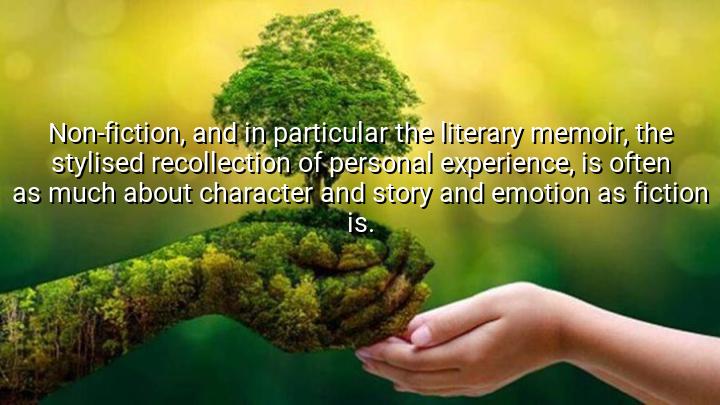




In this quote, Chimamanda Ngozi Adichie, a celebrated Nigerian author, explores the nature of non-fiction, particularly the literary memoir. She suggests that non-fiction, and memoirs in particular, can be as emotionally compelling and engaging as fiction. While memoirs are rooted in personal experience, they often share many of the same elements found in fictional works, such as character, story, and emotion. Adichie is emphasizing that the boundaries between fiction and non-fiction can sometimes blur, as both genres aim to evoke strong emotional responses and connect with the reader on a deep level.
Adichie’s perspective challenges the common assumption that non-fiction is strictly factual and devoid of the storytelling techniques used in fiction. By focusing on the stylised recollection of personal experience, she highlights how memoir writers, like novelists, carefully craft their narratives to convey more than just raw facts—they aim to tell a story, reveal character, and evoke emotions. In this sense, a well-written memoir can be just as dramatic and narratively complex as a work of fiction.
This quote also speaks to the artistic and creative aspects of writing memoirs. Adichie suggests that the act of recollecting personal experiences is not merely a process of recounting events but also involves a degree of artistry in how those experiences are framed and shared. The way a memoirist portrays their life story, develops characters (including themselves), and creates emotional resonance makes the genre deeply rooted in the craft of storytelling, just like any fictional work.
Ultimately, Adichie’s statement highlights the richness and complexity of non-fiction, particularly literary memoirs. She invites readers to appreciate memoirs not just as factual accounts but as crafted narratives that can explore the human experience with the same depth and emotional intensity as fiction. In this way, memoir writing is both an act of personal reflection and a literary endeavor.

AAdministratorAdministrator
Welcome, honored guests. Please leave a comment, we will respond soon