

My prayer became 'May I find peace... May I love this life no matter what.' I was seeking an inner refuge, an experience of presence and wholeness that could carry me through whatever losses might come.
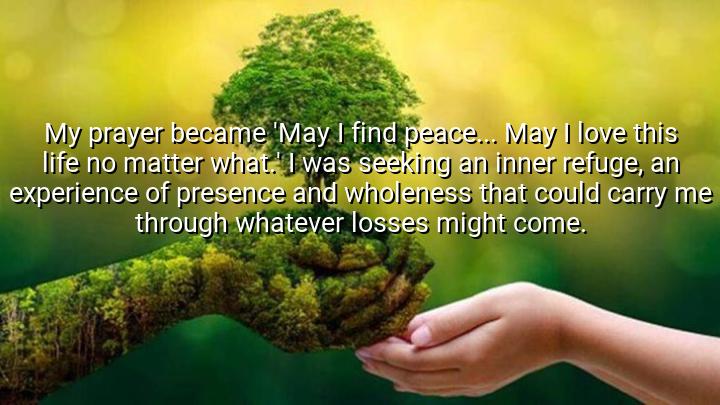




The quote by Tara Brach, “My prayer became 'May I find peace... May I love this life no matter what.' I was seeking an inner refuge, an experience of presence and wholeness that could carry me through whatever losses might come,” reflects a deeply personal journey toward emotional resilience, mindfulness, and self-compassion. Brach’s words emphasize the importance of cultivating inner peace not just in joyful moments, but especially in times of grief, change, or uncertainty. Her prayer is a call to remain open-hearted and present, even in the face of life’s inevitable suffering.
Tara Brach is a well-known psychologist, meditation teacher, and author in the field of Buddhist psychology. Her teachings often focus on how to integrate spiritual practice with everyday life, especially during challenging times. This quote encapsulates her approach: using mindful awareness and radical acceptance to build an internal sense of refuge—a safe, grounded space within oneself that is not dependent on external conditions.
The phrase “inner refuge” is especially meaningful in Brach’s work. It refers to a state of wholeness, presence, and self-acceptance where one can find stability amid emotional turmoil. By choosing to love life “no matter what,” she is not denying hardship, but rather affirming a compassionate and courageous response to it. This mindset invites individuals to experience life fully—grief and joy alike—without shutting down or retreating.
Ultimately, Brach’s quote serves as a gentle yet powerful reminder that peace and healing begin within. It encourages us to turn inward and nurture a space of stillness and love, one that can support us through whatever losses or trials life may bring. In doing so, we deepen our capacity to live with grace, clarity, and an unwavering connection to the present moment.

AAdministratorAdministrator
Welcome, honored guests. Please leave a comment, we will respond soon