

My experience has shown me that many people struggle with forgiveness of self and/or others.
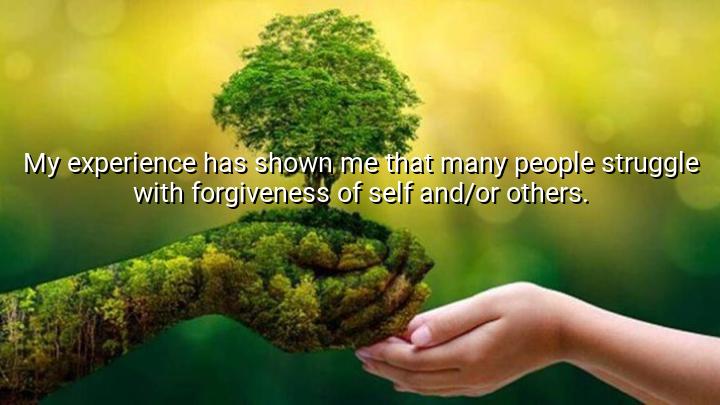




Malik Yoba’s quote speaks to the struggle with forgiveness, both of oneself and others. He acknowledges that many individuals face difficulty in letting go of past mistakes, transgressions, or emotional wounds. Forgiveness is often an essential step toward healing, but the process can be challenging, as it requires vulnerability, humility, and emotional strength. Yoba suggests that this internal struggle is more common than many might realize, affecting a wide range of people across various circumstances.
The phrase forgiveness of self indicates that individuals often find it hardest to forgive themselves for perceived shortcomings or actions they regret. Self-forgiveness is a critical part of emotional well-being, yet many people struggle with feelings of guilt, shame, or self-blame. Without self-forgiveness, personal growth and healing can be stunted, as individuals may remain trapped in negative cycles of self-criticism and regret.
Similarly, the forgiveness of others is another difficult area that Yoba highlights. When someone has been wronged, the act of forgiving may seem impossible, especially when the hurt feels deep or unforgivable. However, Yoba’s statement suggests that not forgiving others can lead to resentment and emotional turmoil, which may prevent individuals from moving forward in their relationships or in life.
The origin of the quote reflects Malik Yoba’s understanding of the emotional complexities people face. As an actor and public figure, Yoba has often spoken about personal growth, healing, and the human experience. This quote serves as a reminder of the importance of forgiveness—both for ourselves and for others—as a path to emotional freedom and peace.

AAdministratorAdministrator
Welcome, honored guests. Please leave a comment, we will respond soon