

Music does not have colour or religion. If I listen to a song, I don't care about the colour, religion, or country of the singer. It doesn't matter, even if it is in another language, because I love the music.
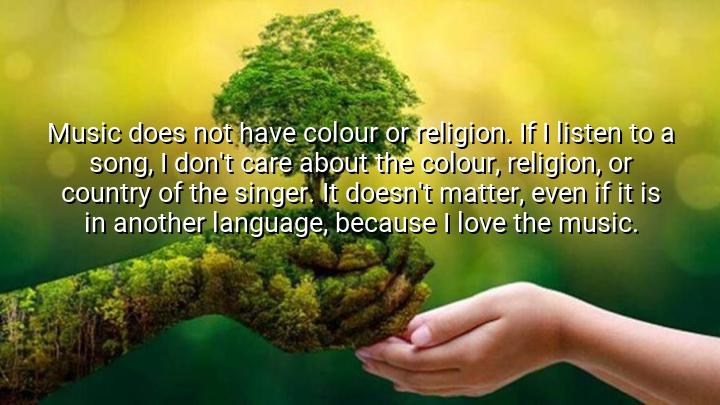




In this quote, Adnan Sami, a renowned musician and composer, expresses the universal and inclusive nature of music. He emphasizes that music transcends color, religion, and nationality. For Sami, the joy and emotional connection that music provides are not influenced by the identity of the artist. Whether the song is in a different language, performed by someone from another country, or rooted in a completely different cultural or religious context, what matters most to him is the music itself.
Sami’s perspective reflects a broader understanding of music as a universal language. Unlike other forms of communication that may be constrained by cultural or linguistic boundaries, music has the power to connect people across these divides. The quote suggests that music’s appeal lies in its ability to speak to emotions and experiences that are common to all people, regardless of their background. It’s a reminder that the universal nature of music can unite us, even when we may not share a common language or belief system.
This view challenges the idea that identity—whether cultural, religious, or racial—should define our preferences or biases. By saying, "I don’t care about the color, religion, or country of the singer," Sami dismisses the importance of these divisions, highlighting that the art itself should be the focal point. This is a powerful stance against the often divisive forces that influence how we perceive and interact with others. Music, for Sami, is an embodiment of harmony, where such distinctions are irrelevant to its enjoyment.
Ultimately, this quote illustrates Adnan Sami's belief in the transformative power of music. It serves as a celebration of music’s ability to bridge differences and create connections that go beyond superficial boundaries. Whether the song is from the East or West, in English or Hindi, it’s the emotion and melody that truly matter to the listener. Music, as Sami points out, can speak to the heart without needing to be filtered through labels or divisions.

AAdministratorAdministrator
Welcome, honored guests. Please leave a comment, we will respond soon