

Mothers tend to be more direct. Fathers talk to other fathers about their kids more metaphorically. It's a different way of communication.
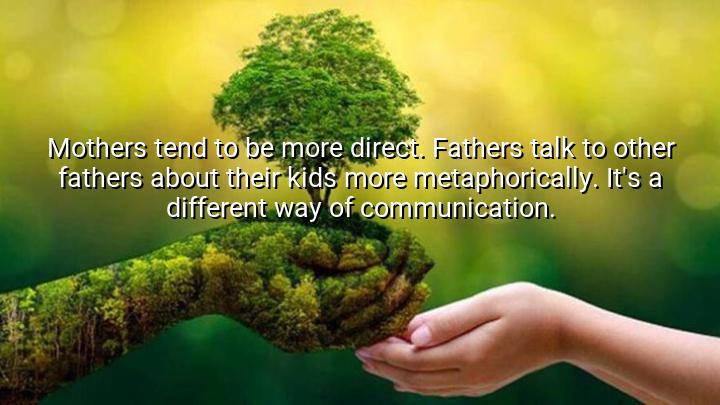




The quote by Richard Louv discusses the different styles of communication between mothers and fathers when talking about their children. Louv suggests that mothers tend to be more direct in their approach, likely speaking clearly and specifically about their children's needs, behaviors, and experiences. In contrast, fathers are portrayed as communicating in a more metaphorical way when discussing their kids with other fathers, possibly using broader or more abstract terms to convey their thoughts and feelings.
Louv's statement highlights the idea that gender influences communication styles, particularly in how parents engage with each other about their roles and experiences. The difference in how mothers and fathers speak about their children can be seen as a reflection of broader cultural or social norms. While mothers may emphasize direct involvement and practical concerns, fathers might lean toward sharing their observations and reflections in a way that isn't as literal but still meaningful.
The origin of the quote comes from Richard Louv, an American journalist and author, known for his work on the connection between children, nature, and the changing dynamics of modern family life. Louv’s exploration of parenting styles is part of a larger conversation about how society’s evolving expectations shape our roles as parents. His observation of these different communication methods reflects his interest in understanding the nuances of family dynamics.
In a broader sense, Louv’s quote sheds light on how the act of parenting is not only about the care of children but also about how parents communicate their experiences with each other. The contrasting communication styles can influence the way parenting is viewed within a family and society, revealing the diversity in how parents connect with one another while sharing the same responsibility.

AAdministratorAdministrator
Welcome, honored guests. Please leave a comment, we will respond soon