

I do not trust technology. I mean, I don't think we're in any danger of kids, you know, doing without video games in the future, but I am saying that their lives are largely out of balance.
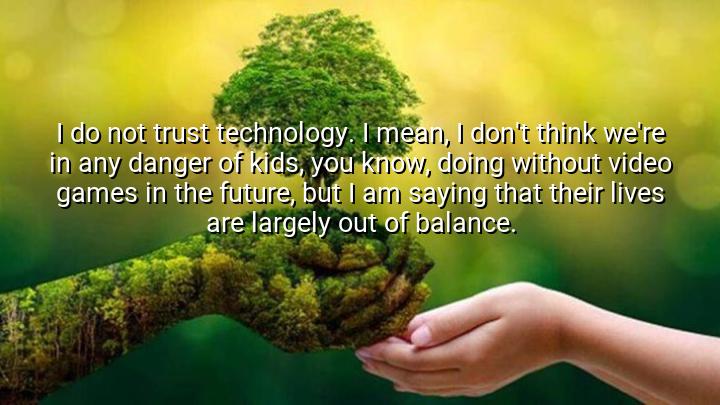




Richard Louv’s quote, "I do not trust technology. I mean, I don't think we're in any danger of kids, you know, doing without video games in the future, but I am saying that their lives are largely out of balance," expresses a concern about the growing influence of technology in the lives of young people, particularly in how it affects their overall well-being and development. Louv, a journalist and author known for his work on the importance of connecting children with nature, is warning that while video games and other technological tools are unlikely to disappear, they may be contributing to an unhealthy lifestyle for kids.
The phrase "I do not trust technology" highlights Louv's skepticism about the role digital devices and screen-based entertainment play in the lives of children. His concern is not necessarily about the technology itself, but about the way it is being used and the potential consequences of spending too much time interacting with screens. Louv points out that children are increasingly engaged with technology at the cost of other important activities, such as outdoor play, socializing, and engaging with the physical world.
Louv emphasizes that kids' lives are "out of balance" because of this overwhelming reliance on video games and other forms of technology. His critique suggests that while technology can offer benefits, such as entertainment and education, it should not dominate children’s lives. The imbalance arises when the time spent with technology is disproportionate to other important aspects of a child's growth, like physical activity, creativity, and real-world experiences.
In essence, Louv’s quote serves as a reminder that technology should not replace essential human experiences, such as interacting with nature or developing social skills. He advocates for a more balanced approach, where digital experiences complement, rather than overwhelm, the full spectrum of childhood development.

AAdministratorAdministrator
Welcome, honored guests. Please leave a comment, we will respond soon