

Mother Nature is not sweet.
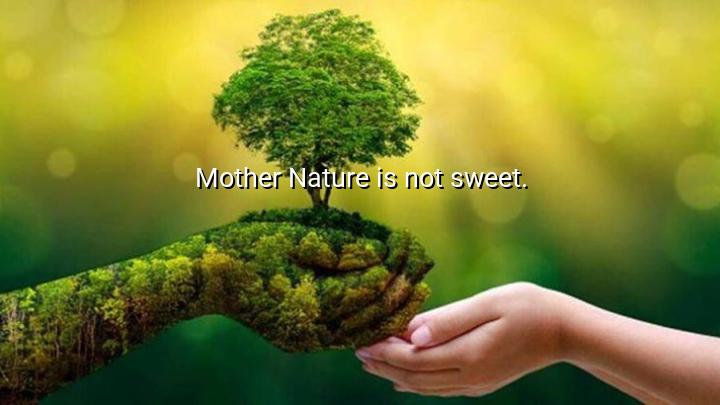




John Shelby Spong’s quote, "Mother Nature is not sweet," challenges the commonly held perception of nature as a nurturing, gentle force. Instead, Spong emphasizes that nature is often harsh, unpredictable, and indifferent to human desires. The idea of Mother Nature as a benign, caring figure is upended in favor of a view that acknowledges the raw, untamed aspects of the natural world. In this view, nature operates according to its own rules, and its beauty and bounty can be coupled with destruction and chaos.
The origin of this quote can be traced to Spong's broader theological and philosophical reflections. As an influential Episcopal bishop and author, Spong frequently explored questions of faith, suffering, and the nature of God in the context of the world’s reality. This statement speaks to his perspective that life, in all its forms, includes not only the joy and serenity we often associate with nature, but also its danger, violence, and suffering. By acknowledging this, Spong calls for a more mature and realistic understanding of the world, one that embraces the full spectrum of human and natural experience.
Spong’s quote also invites reflection on the human relationship with nature. Many cultures have portrayed nature as a motherly figure, offering comfort and care. But Spong’s statement challenges this romanticized view, urging us to recognize that nature’s true nature includes both creation and destruction, life and death. It’s a reminder that survival in the natural world often requires resilience and adaptation, not just the hope for comfort or peace.
Ultimately, Spong’s words challenge us to confront the complexities of the world around us. By acknowledging that Mother Nature is not always sweet, we can cultivate a more grounded and respectful relationship with the forces of nature, recognizing their power, unpredictability, and the need for balance in how we interact with them.

AAdministratorAdministrator
Welcome, honored guests. Please leave a comment, we will respond soon