

Metro police can't infuse hope into those for whom hope is foreign. The algorithm does not exist that can heal the traumatized. Data-driven predictions won't result in the delivery of mental health services.
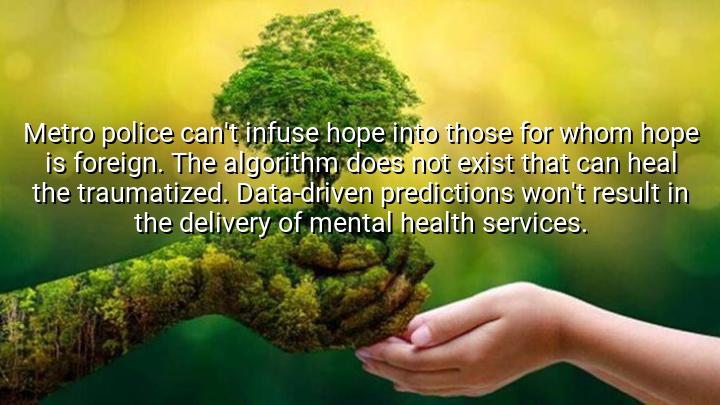




In this quote, Greg Boyle reflects on the limitations of relying solely on >technology in addressing complex social issues like mental health and trauma. He argues that metro police and algorithm-based systems cannot instill hope in individuals who have been deeply affected by trauma. Boyle is emphasizing that human connection, empathy, and understanding are essential in addressing the root causes of mental health issues rather than just relying on data or predictive models.
Boyle also critiques the idea that >trauma. His statement points out that mental health cannot be reduced to mere numbers or trends in a system, as it requires personal care, healing, and emotional support that cannot be easily predicted or delivered through algorithms. The message here is that while technology and data are important tools, they cannot replace the deeply personal and compassionate work needed to address mental health challenges.
The origin of this quote comes from Boyle’s extensive work with at-risk youth and his experience with Homeboy Industries, an organization he founded to help former gang members transition out of their violent lifestyles. Boyle has spent much of his career advocating for compassionate support and restorative justice, emphasizing the importance of humanity in addressing social issues. His words reflect his belief that real healing and recovery come from human interaction and support, not just systems or statistics.
Boyle’s quote serves as a critique of the over-reliance on technological solutions for problems that require deep emotional healing and personal engagement. It’s a call to recognize the limits of data and to understand that the true path to healing for those who have suffered trauma lies in compassionate, individualized care.

AAdministratorAdministrator
Welcome, honored guests. Please leave a comment, we will respond soon