

Mental health is seen as a massive drag to have to write about - worthy, dull. Something you should 'have' to read / write about.
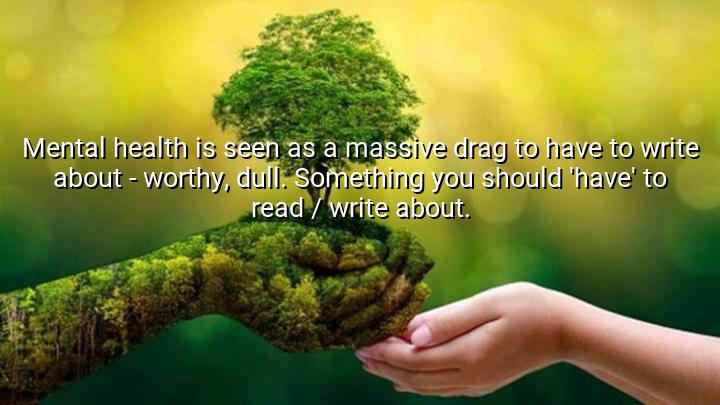




Caitlin Moran's quote highlights the societal perception of mental health as a topic that is often viewed as boring or unpleasant. It reflects the uncomfortable attitude many people have towards discussing mental health, seeing it as something that should be addressed, but not something that is exciting or engaging. The phrase "worthy, dull" suggests that, while mental health is important, it lacks the appeal or intrigue of other subjects that are considered more glamorous or entertaining.
The origin of this sentiment can be traced to the stigma surrounding mental health. For many years, it has been regarded as a taboo topic that people avoid, often due to the discomfort it brings. Writing or reading about mental health is viewed as a chore rather than an opportunity for learning or connection. Moran's critique challenges this assumption by suggesting that mental health should be as engaging and important as any other subject, deserving the same level of attention and interest.
Moran's words also highlight the need to change how we approach and discuss mental health. If we continue to treat it as a "drag" to talk about, we miss the opportunity to destigmatize it and make it a part of normal, open conversations. She invites us to see mental health as something that can be engaging and relatable, not just something to be endured out of obligation.
Finally, Moran's quote serves as a call for more compassionate and dynamic conversations around mental health. By reframing it as a subject worthy of thoughtful engagement, we can begin to create a culture where people are encouraged to understand and support mental health in a more compassionate and active way.

AAdministratorAdministrator
Welcome, honored guests. Please leave a comment, we will respond soon