

May the God of your choice bless and keep you. I respect Him as long as He does not circumcise me anymore.
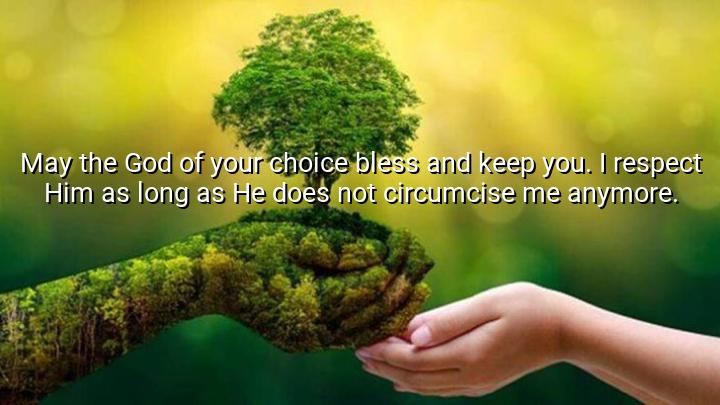




Kinky Friedman’s quote, "May the God of your choice bless and keep you. I respect Him as long as He does not circumcise me anymore," combines humor with a sharp critique of religion and tradition. Friedman, a musician, writer, and humorist known for his irreverent style, uses this statement to acknowledge the idea of faith while simultaneously making a sardonic comment about certain religious practices. The reference to circumcision is both personal and cultural, suggesting that while he may respect the divine or the concept of God, there are parts of religious tradition that he finds unappealing or even invasive.
The line about circumcision also highlights the tension between personal autonomy and the practices that different religions or cultures impose. Friedman is poking fun at the rituals and traditions that often define religious identity, particularly within Judaism, where circumcision is a key part of ritual initiation. His remark, framed humorously, suggests that while he is open to the idea of God or spirituality, he has limits when it comes to the demands made on his body by religious rites. It’s a satirical commentary on the balance between faith and the more physical or intrusive aspects of religious observance.
The origin of the quote stems from Kinky Friedman’s longstanding reputation for irreverence and dark humor. As someone who often mixed the sacred with the profoundly absurd, Friedman was known for challenging both cultural norms and religious conventions in a way that invited laughter, but also reflection. By blending a blessing with a personal boundary, he illustrates how humor can be a tool for expressing respect while also critiquing what might be seen as outdated or overly zealous practices.
Ultimately, the quote captures Friedman’s unique approach to discussing religion: one that balances respect for personal belief with a critical eye toward certain traditional practices. It reflects his belief in the individual’s right to choose their own path, even when navigating the sometimes rigid structures of faith and tradition.

AAdministratorAdministrator
Welcome, honored guests. Please leave a comment, we will respond soon