

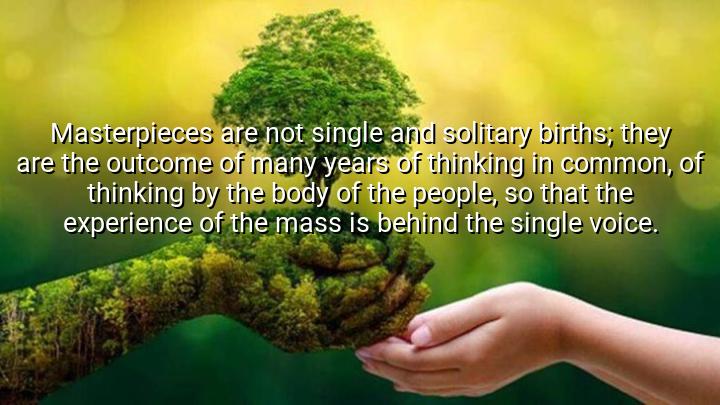
Masterpieces are not single and solitary births; they are the outcome of many years of thinking in common, of thinking by the body of the people, so that the experience of the mass is behind the single voice.
Masterpieces are not single and solitary
Masterpieces are not single and solitary births; they are the outcome of many years of thinking in common, of thinking by the body of the people, so that the experience of the mass is behind the single voice.

Masterpieces are not single and solitary
Masterpieces are not single and solitary births; they are the outcome of many years of thinking in common, of thinking by the body of the people, so that the experience of the mass is behind the single voice.
Masterpieces are not single and solitary
Masterpieces are not single and solitary births; they are the outcome of many years of thinking in common, of thinking by the body of the people, so that the experience of the mass is behind the single voice.
Masterpieces are not single and solitary
Masterpieces are not single and solitary births; they are the outcome of many years of thinking in common, of thinking by the body of the people, so that the experience of the mass is behind the single voice.
Masterpieces are not single and solitary
Masterpieces are not single and solitary births; they are the outcome of many years of thinking in common, of thinking by the body of the people, so that the experience of the mass is behind the single voice.
Masterpieces are not single and solitary

The quote by Virginia Woolf emphasizes that masterpieces—great works of art or literature—are rarely the product of a single moment of inspiration or an individual effort alone. Instead, she argues that they are the result of many years of collective thinking and shared experience within a community or society. Woolf highlights how the wisdom and creativity of the many people who come before an artist contribute to the final work, making it a product of the “body of the people” rather than just one voice.

Virginia Woolf, a prominent modernist writer and thinker, often explored themes of collective consciousness and the interconnectedness of human experience. Her statement reflects her belief that cultural achievements are deeply embedded in the shared knowledge, history, and emotional life of society. This collective foundation shapes and enriches the artist’s work, giving it depth and resonance.

The quote suggests that behind every great creation lies a rich tapestry of accumulated thoughts, struggles, and insights from the broader community. It challenges the romantic notion of the lone genius by acknowledging the vital role of cultural inheritance and communal influence in the creative process.

In essence, Woolf’s words remind us that masterpieces carry the legacy of many voices and experiences. They are not isolated creations but rather the culmination of a collective journey that shapes the single, unique voice of the artist.

Virginia Woolf
Virginia Woolf

British - Author January 25, 1882 - March 28, 1941

Have 0 Comment Masterpieces are not single and solitary

AAdministratorAdministrator

Welcome, honored guests. Please leave a comment, we will respond soon

Reply.
Information sender
Leave the question
Click here to rate
Information sender
0.36079 sec| 2564.313 kb