

Many promising reconciliations have broken down because while both parties come prepared to forgive, neither party come prepared to be forgiven.
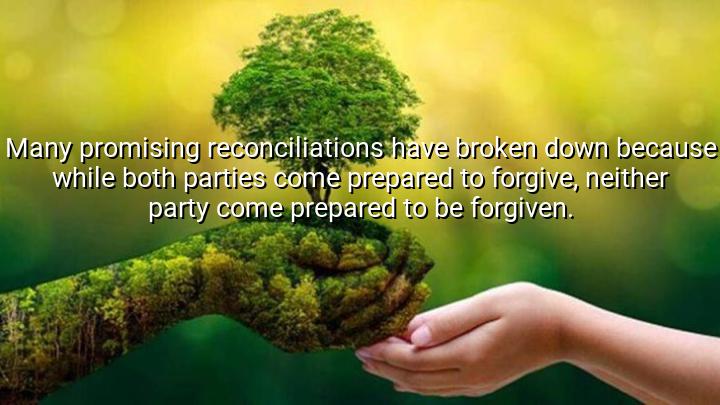




In this quote, Charles Williams highlights the complexity of reconciliation and the delicate nature of forgiveness between two parties. He suggests that while both parties may approach a conflict or disagreement with the intention to forgive the other, the reconciliation process often falters because neither is prepared to be forgiven. Forgiveness requires not just the willingness to let go of resentment, but also the ability to accept one's own wrongs and the humility to accept forgiveness from the other side.
Williams’ observation underscores that true reconciliation goes beyond merely offering forgiveness—it also involves accepting responsibility for one's actions and being open to receiving forgiveness from the other person. Often, people approach reconciliation with the mindset of offering forgiveness but may struggle with the vulnerability required to accept the forgiveness that is offered to them. This dynamic can create tension, preventing genuine healing and growth from taking place in the relationship.
The quote also suggests that pride and ego can hinder the process of reconciliation. Both parties may hold onto their sense of self-justification or defensiveness, making it difficult to fully embrace the act of forgiveness and move forward. True reconciliation demands a balance of giving and receiving, where both sides are willing to let go of their grievances and allow themselves to be vulnerable with one another.
Ultimately, Williams' statement serves as a reminder that reconciliation is a two-way process that requires openness and humility from both parties. While forgiveness is essential, it’s just as important to be willing to accept forgiveness in return. This reciprocal approach creates the foundation for true healing and the restoration of relationships.

AAdministratorAdministrator
Welcome, honored guests. Please leave a comment, we will respond soon