

Man can and does rationalize his sins. He finds reasons for all his weakness, invents excuses that first calm and then deaden his conscience. He blames God, society, education, and environment for his wrong doing.
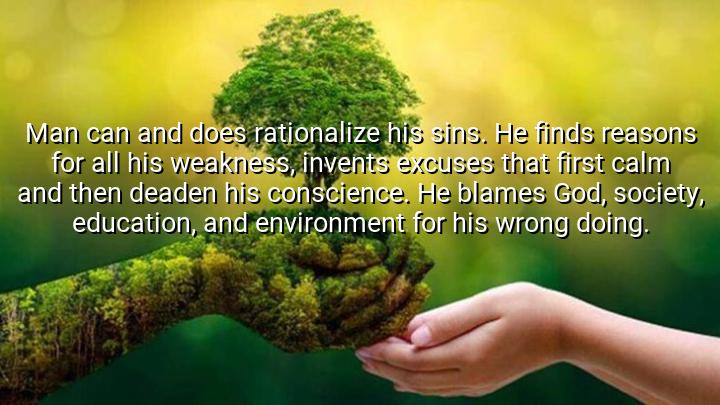




Mother Angelica’s quote explores the human tendency to rationalize wrongdoing. She suggests that man often finds ways to justify his sins or weaknesses, making excuses that initially bring temporary relief but eventually deadens his conscience. By inventing reasons for his actions, a person avoids taking full responsibility for their behavior, allowing guilt to fade and offering a false sense of peace. This process ultimately leads to a numbness of the moral compass, where the individual no longer feels the weight of their actions.
The quote also touches on the blame that many people place on external factors such as God, society, education, and environment. Instead of facing the truth of their actions, they attribute their wrongdoings to circumstances beyond their control. In doing so, they evade personal accountability and reinforce a victim mentality, where they believe they are shaped entirely by forces outside of themselves.
Mother Angelica, a Catholic nun and founder of the Eternal Word Television Network (EWTN), often spoke about the importance of personal responsibility and the need to face one’s sins with honesty and contrition. This quote reflects her belief that self-deception is one of the greatest barriers to spiritual growth. By rationalizing behavior instead of confronting it, individuals hinder their own journey toward redemption and moral clarity.
The quote serves as a reminder that true growth and healing come from acknowledging one’s flaws and seeking forgiveness, rather than shifting blame onto others. Mother Angelica’s perspective challenges the tendency to excuse behavior, urging individuals to take ownership of their actions and align themselves with their higher moral calling.

AAdministratorAdministrator
Welcome, honored guests. Please leave a comment, we will respond soon