

Look for me in the nurseries of Heaven.
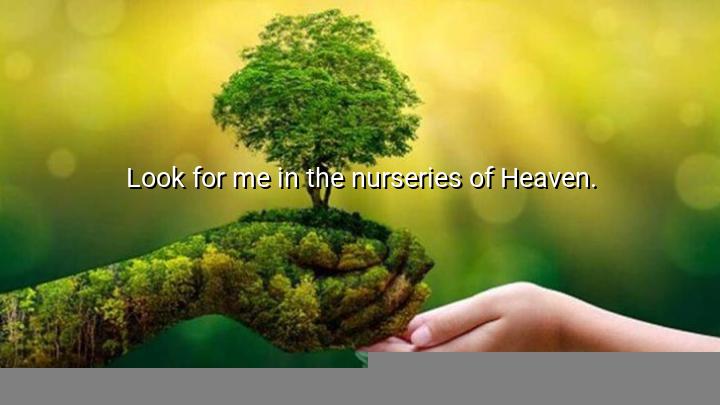




Francis Thompson's quote, "Look for me in the nurseries of Heaven," is a poetic expression of his longing for peace and spiritual rest. The nurseries of Heaven symbolize a place of innocence, comfort, and care, where souls are nurtured and cared for in the afterlife. By asking others to "look for me" there, Thompson is suggesting that after his death, he will find his place in a realm of pure love and divine nurturing. The image of a nursery conjures a sense of serenity, implying that Thompson sees the afterlife not as a place of judgment but as one of renewal and rest.
The quote also reflects Thompson's broader themes of suffering and redemption in his work. Thompson, a poet known for his deeply spiritual writings, often wrestled with his own struggles, including addiction and a sense of spiritual disillusionment. In this context, "look for me" can be seen as a message of hope, suggesting that after enduring life's hardships, he will ultimately find peace and solace in the eternal care of a higher power. The nursery represents the idea of spiritual rebirth, where the soul is renewed and cared for in the presence of the divine.
Thompson’s words also echo the Christian understanding of Heaven as a place of ultimate peace and restoration. The concept of a nursery, a place where life begins and is nurtured, aligns with Christian imagery of Heaven as a place where souls are welcomed and healed. Thompson, through this metaphor, speaks to the comfort that believers find in the promise of an afterlife, where the troubles and trials of the earthly life are left behind.
The origin of this quote comes from Francis Thompson, an English poet known for his deeply religious and reflective works, such as "The Hound of Heaven." His personal struggles with faith and addiction are reflected in much of his poetry, which explores the tension between human frailty and divine grace. In this particular quote, Thompson’s reference to the nurseries of Heaven offers a glimpse into his spiritual longing, portraying death as not an end, but a return to a place of ultimate peace and nurturing.

AAdministratorAdministrator
Welcome, honored guests. Please leave a comment, we will respond soon