

Like I said, I'm more worried long term about the environmental issues then the use of arms.
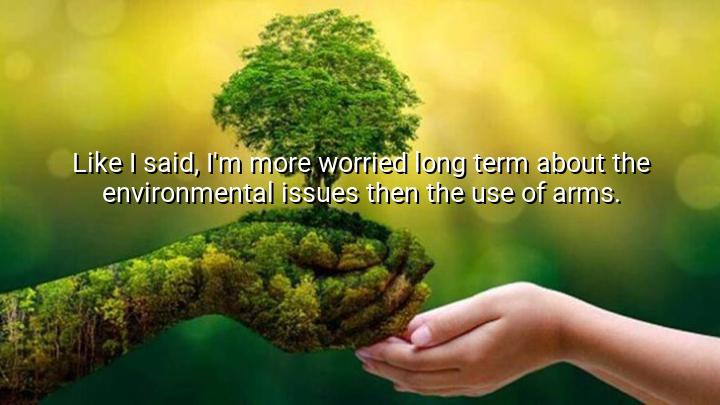




Hans Blix’s quote reflects his perspective on global priorities, emphasizing that he is more concerned about environmental issues in the long term than the immediate concerns surrounding the use of arms. By stating that his worry is long-term, Blix is drawing attention to the sustainability and future well-being of the planet, suggesting that environmental degradation will have a far-reaching impact that could be more devastating than conflicts involving weaponry. This reflects a broader, strategic view of global threats, where climate change, resource depletion, and biodiversity loss pose critical challenges for future generations.
Blix’s mention of arms likely refers to the ongoing concerns about militarization, conflict, and the proliferation of weapons of mass destruction. However, by prioritizing environmental issues, he underscores the fact that while conflicts may cause immediate damage, the long-term survival of humanity is more directly tied to the health of the environment. The degradation of natural resources, climate shifts, and pollution could destabilize societies in ways that are even more destructive than warfare.
The origin of this quote likely stems from Blix’s background as a Swedish diplomat and former chief weapons inspector for the United Nations. In this role, he dealt with issues related to disarmament and the prevention of chemical, biological, and nuclear weapons. His experience with global security issues, combined with his broader concern for global well-being, led him to reflect on the environmental crises that threaten the planet’s future.
In summary, Blix’s quote emphasizes that while arms control is crucial, environmental sustainability poses a greater long-term risk to the planet. His words serve as a reminder that global security and peace are not solely defined by the absence of conflict, but also by the health of the earth. He encourages a shift in focus toward addressing environmental crises as the foundation for a stable and secure future.

AAdministratorAdministrator
Welcome, honored guests. Please leave a comment, we will respond soon