

Like all good citizens, the elderly and people with disabilities want to eradicate waste and fraud from government, but helping people with special needs meet their basic needs doesn't fit this description.
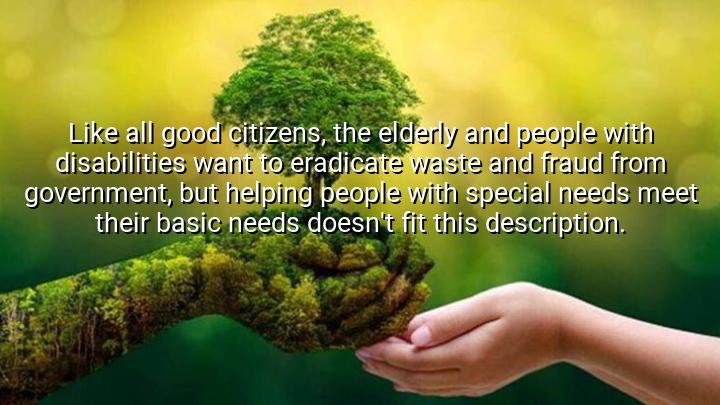




The quote by Joni Eareckson Tada emphasizes the importance of supporting elderly individuals and people with disabilities, recognizing that, like all good citizens, they want to see waste and fraud eradicated from government. However, Tada points out that providing assistance to people with special needs—such as ensuring they have access to basic necessities—is not the same as enabling wasteful spending or fraud. Her statement suggests that addressing the real needs of vulnerable populations should not be conflated with government inefficiency, as meeting these needs is an essential part of ensuring dignity and justice for all citizens.
Tada’s comment reflects her strong belief in the need to care for individuals with special needs, advocating for a compassionate approach to government assistance. She argues that supporting these groups, especially in meeting their basic needs, is not a matter of waste, but rather a necessary societal responsibility. By framing this issue in terms of human dignity, Tada highlights that the goal is to ensure these individuals live with respect and access to essential services, not to perpetuate inefficiency.
The origin of this quote comes from Tada’s work as a disability advocate and her personal experience with quadriplegia after a diving accident left her paralyzed. She has been a vocal advocate for people with disabilities, pushing for better access to resources, healthcare, and opportunities for individuals with special needs. Tada’s perspective is rooted in her deep understanding of the challenges faced by people with disabilities and the importance of providing them with proper care and support.
In essence, Tada’s quote stresses the need to distinguish between necessary government assistance for vulnerable populations and mismanagement of resources. It serves as a call for a more compassionate and responsible approach to social welfare, one that ensures people with special needs are treated with the respect and care they deserve without being unfairly associated with wasteful spending.

AAdministratorAdministrator
Welcome, honored guests. Please leave a comment, we will respond soon