

Learning from the experiences of our ancestors, let us together create knowledge for all that benefits all.
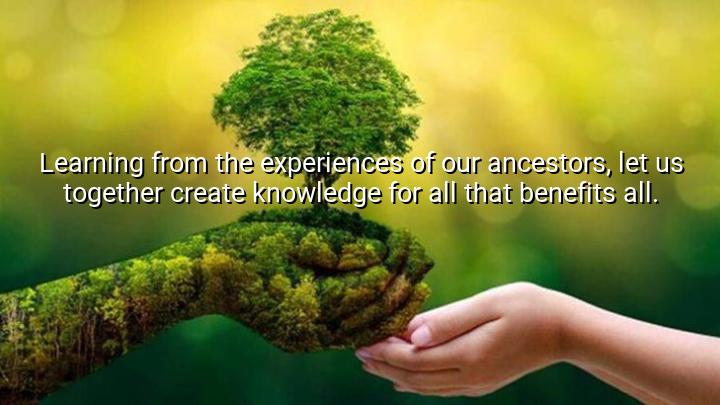




The quote by Kailash Satyarthi, "Learning from the experiences of our ancestors, let us together create knowledge for all that benefits all," emphasizes the importance of collective learning and the ethical application of knowledge. Satyarthi, an Indian child rights activist and Nobel Peace Prize laureate, highlights that the wisdom and lessons from past generations can guide contemporary efforts to improve society. By building on the experiences of those who came before, humanity can develop solutions that are more informed, compassionate, and inclusive.
By stressing the creation of knowledge for all, Satyarthi underscores the idea that learning and education should be universally accessible. Knowledge should not be confined to a privileged few; instead, it should empower communities, promote equality, and address pressing social issues such as poverty, child labor, and injustice. The phrase "that benefits all" reflects a commitment to ethical responsibility in the application of knowledge.
The quote also reflects Satyarthi’s broader philosophy on education and social reform. He believes that education and learning are tools for empowerment and social transformation. By combining historical insights with contemporary innovation, societies can create sustainable solutions that serve the common good.
Originating from Satyarthi’s advocacy for children’s rights, education, and social justice, the quote captures his vision of collaborative and inclusive progress. It serves as a reminder that knowledge, when shared and applied ethically, has the power to benefit everyone and contribute to a more just and equitable world.

AAdministratorAdministrator
Welcome, honored guests. Please leave a comment, we will respond soon