

I've never been convinced that experience is linear, circular, or even random. It just is. I try to put it in some kind of order to extract meaning from it, to bring meaning to it.
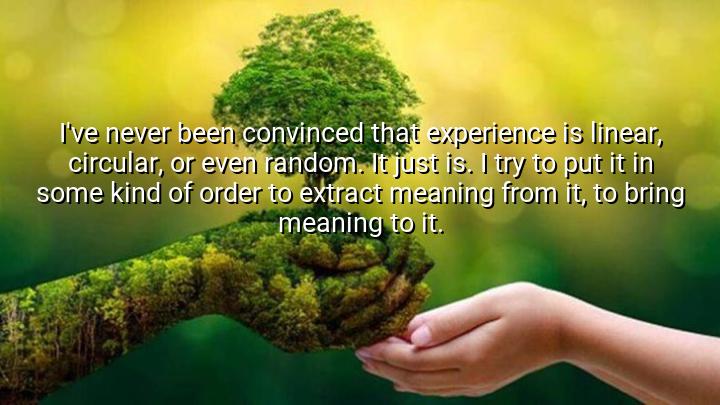




Toni Cade Bambara’s quote, "I've never been convinced that experience is linear, circular, or even random. It just is. I try to put it in some kind of order to extract meaning from it, to bring meaning to it," reflects her perspective on the complexity of human experience. Bambara suggests that experience cannot be neatly categorized or understood within a defined structure, whether it's a linear progression, a circular pattern, or something random. Instead, she emphasizes that experience simply exists, and it's our job to make sense of it, organizing it in a way that gives it meaning.
The idea that experience "just is" highlights the chaotic and unpredictable nature of life. Bambara’s approach suggests that rather than seeking to fit experiences into predetermined patterns or structures, we must accept their inherent unpredictability and complexity. The act of trying to impose order on experience reflects the human desire to understand the events and emotions that shape our lives, giving them context and significance.
The phrase "to extract meaning from it" speaks to the idea that understanding often comes from actively reflecting on and interpreting our experiences. Bambara’s statement emphasizes that while experience may not follow a predictable or understandable path, individuals can find ways to make sense of it by reflecting, interpreting, and drawing connections. This process of finding meaning is deeply personal and is a central part of human growth and self-awareness.
The origin of this quote is rooted in Bambara's work as a writer, filmmaker, and social activist, where she often explored themes of identity, culture, and the complexities of lived experience. Known for her focus on the African American experience and the nuanced portrayal of individuals’ lives, Bambara’s quote reflects her belief in the complexity of human life and the need for individuals to find their own way of understanding and giving meaning to their journey.

AAdministratorAdministrator
Welcome, honored guests. Please leave a comment, we will respond soon