

It's very important that we keep our imagination, which is our capacity to open the future, awake at a time at which the urge to collapse into the fetal position is high.
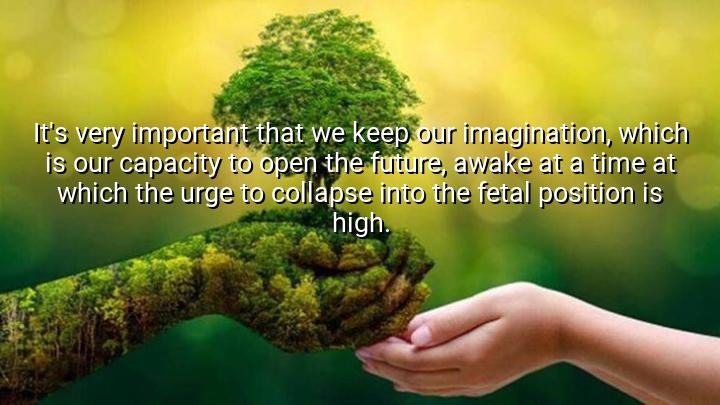




The quote, "It's very important that we keep our imagination, which is our capacity to open the future, awake at a time at which the urge to collapse into the fetal position is high," comes from Timothy Morton, a contemporary philosopher known for his work in ecology, philosophy, and literary theory. Morton is often associated with the concept of dark ecology, which addresses the complexities and challenges of human existence in a world facing environmental crisis. This quote speaks to the importance of keeping the imagination alive, particularly in times of difficulty or despair.
Morton suggests that imagination is a crucial tool for opening up new possibilities and understanding the future, especially when the tendency to feel overwhelmed or helpless—symbolized by the urge to collapse into the fetal position—is strong. In moments of crisis or uncertainty, it's easy to succumb to fear or hopelessness, but Morton argues that nurturing our creative and imaginative abilities can help us confront and overcome such challenges, offering a path to transformation and progress.
The reference to the fetal position metaphorically describes a state of withdrawal or retreat, a natural response when facing difficult situations. However, Morton highlights that imagination serves as a counterforce to this tendency. Rather than curling inward, we can use our capacity to imagine to envision better futures, new solutions, and the potential for change. Imagination, in this context, becomes a form of resistance to despair and stagnation.
Ultimately, Morton emphasizes the vital role of imagination in shaping the future, particularly during times of crisis. By keeping it "awake," we are better equipped to face challenges with hope and creativity, preventing ourselves from succumbing to fear or a sense of powerlessness. It’s a call to embrace the power of imagination to move forward, even when the world feels uncertain or overwhelming.

AAdministratorAdministrator
Welcome, honored guests. Please leave a comment, we will respond soon