

It's funny the way most people love the dead. Once you are dead, you are made for life.
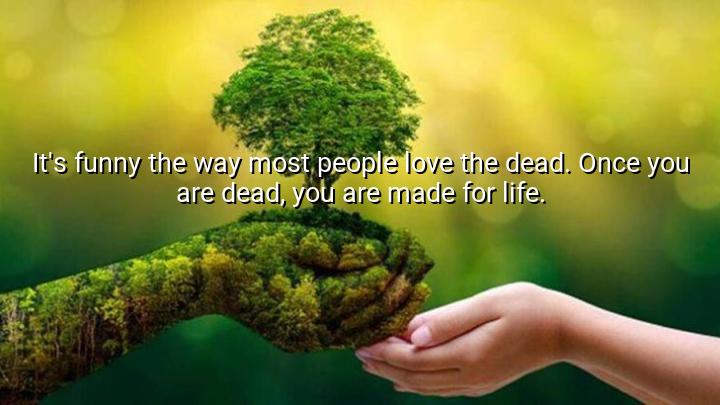




The quote "It's funny the way most people love the dead. Once you are dead, you are made for life." by Jimi Hendrix reflects on the paradox of fame and legacy, particularly how people tend to appreciate and celebrate individuals more after they have passed away. Hendrix, a legendary musician and icon, comments on the irony that many artists or influential figures, especially those in the music industry, often gain more recognition and adoration after their death than during their lifetime. The phrase "you are made for life" suggests that death immortalizes a person in the public consciousness, turning them into a symbol or a figure whose influence continues to grow.
The origin of this quote comes from Jimi Hendrix’s own experience as a pioneering artist. During his life, Hendrix was known for his innovative approach to music, blending rock, blues, and psychedelic sounds. However, his rise to fame and the full appreciation of his artistic contributions came largely after his untimely death at the age of 27. His reflection points to the irony that despite his immense talent and popularity during his lifetime, his legacy solidified in a way that it might not have if he had lived longer.
Hendrix's statement also touches on the broader human tendency to romanticize or idealize figures after they are gone. People often find it easier to appreciate someone's contributions when they are no longer around to see or criticize their work. This dynamic speaks to the transitory nature of life and how individuals can be more valued once they become distant from the public eye. In a way, his comment critiques the paradox of how we only fully embrace the importance of a person or artist once they no longer exist to witness the recognition.
Ultimately, this quote speaks to the irony of fame and legacy. Hendrix's words capture a truth about how we sometimes fail to recognize or celebrate individuals fully while they are alive, only to elevate them once they are no longer with us. It’s a reminder of the transience of life and how the value of a person’s work and influence often becomes clearer in hindsight, after they have passed on.

AAdministratorAdministrator
Welcome, honored guests. Please leave a comment, we will respond soon