

It is not enough to say we must not wage war. It is necessary to love peace and sacrifice for it.
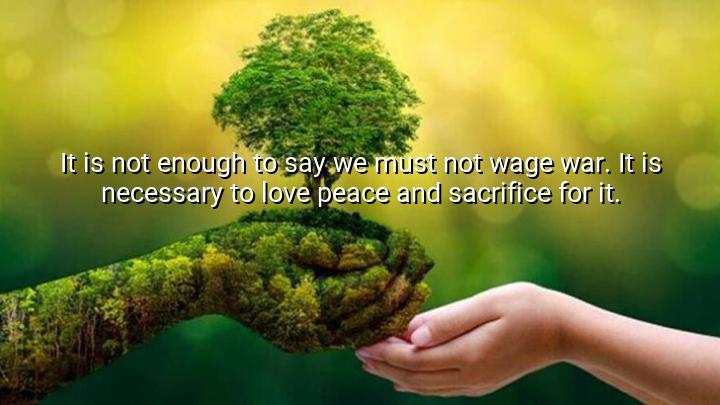




In this quote, Martin Luther King, Jr. stresses that merely avoiding conflict is not sufficient to promote peace. He argues that peace requires an active, intentional effort that goes beyond simply refraining from war. By saying "we must not wage war," King acknowledges that passivity is not enough to counteract violence and injustice. Instead, he calls for a deeper commitment: we must love peace and be willing to make sacrifices for it. This highlights the idea that peace is not a passive state, but an active and sacrificial pursuit that requires effort, dedication, and sometimes personal cost.
King’s statement also suggests that love for peace involves more than just a desire for an absence of war; it means seeking justice, equality, and reconciliation. Loving peace means working toward a society where violence is replaced by understanding, compassion, and cooperation. For King, true peace is not simply the end of war but the presence of justice, where all individuals can live without fear of oppression or discrimination.
The notion of sacrifice is crucial here. King believed that social change and the creation of a just and peaceful world would not come easily; it would require the willingness to endure hardship, to stand up against oppression, and to act even in the face of personal risk. His own life embodied this commitment, as he sacrificed his personal safety and ultimately his life for the cause of racial equality and nonviolence. The quote underscores that peace requires a proactive, even selfless, approach that demands action and personal dedication.
The origin of this quote comes from Martin Luther King, Jr., the renowned leader of the American Civil Rights Movement. A staunch advocate of nonviolence, King’s philosophy was deeply influenced by the teachings of Mahatma Gandhi. Throughout his life, King consistently emphasized that justice and peace cannot be achieved through passive acceptance or avoidance of conflict but must be actively sought through love, sacrifice, and a commitment to nonviolent resistance. His teachings continue to inspire global movements for justice and equality.

AAdministratorAdministrator
Welcome, honored guests. Please leave a comment, we will respond soon