

It is not death, it is dying that alarms me.
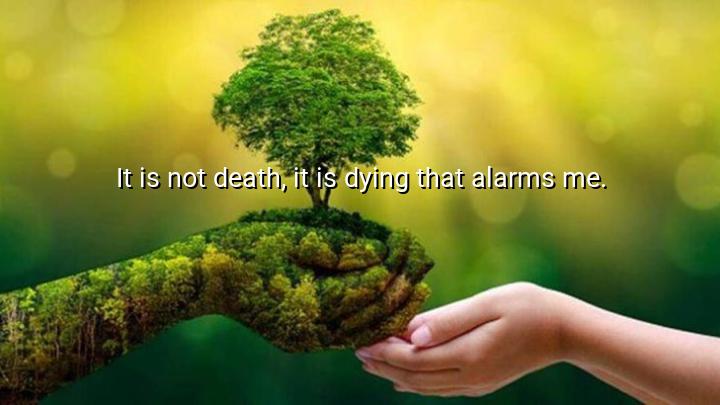




The quote "It is not death, it is dying that alarms me" by Michel de Montaigne reflects the philosopher’s contemplation on the fear of mortality. Montaigne, known for his work in essays and introspection, suggests that the actual act of dying—the process of experiencing death—is more terrifying than the concept of death itself. While many people fear death, Montaigne's reflection draws attention to the uncertainty and suffering associated with the dying process, implying that it's the physical and emotional turmoil of dying that causes anxiety, rather than the inevitable end itself.
In this quote, Montaigne addresses the human tendency to fear the unknown, particularly the transition from life to death. He argues that once death arrives, it is no longer something we can resist, but the gradual nature of dying is what evokes discomfort and fear. The process of dying may involve pain, loss, and a loss of control over one's own body, which makes it a disturbing experience for many.
Montaigne’s words reveal his exploration of existential themes, where he reflects on the nature of life and death without resorting to idealism or romanticism. Rather than focusing on death as an abstract or philosophical concept, he brings attention to the human experience of dying, which can be both a physical and psychological struggle. This perspective invites the reader to consider the quality of life and the importance of accepting mortality with dignity.
Ultimately, Montaigne’s quote captures the complex nature of human fear and mortality. While death itself may seem inevitable, it is the process of dying that often causes the greatest anxiety. Montaigne encourages us to reflect on this fear and consider how we approach the end of life, emphasizing the importance of accepting both life and death with a sense of awareness and grace.

AAdministratorAdministrator
Welcome, honored guests. Please leave a comment, we will respond soon