

It is an eternal obligation toward the human being not to let him suffer from hunger when one has a chance of coming to his assistance.
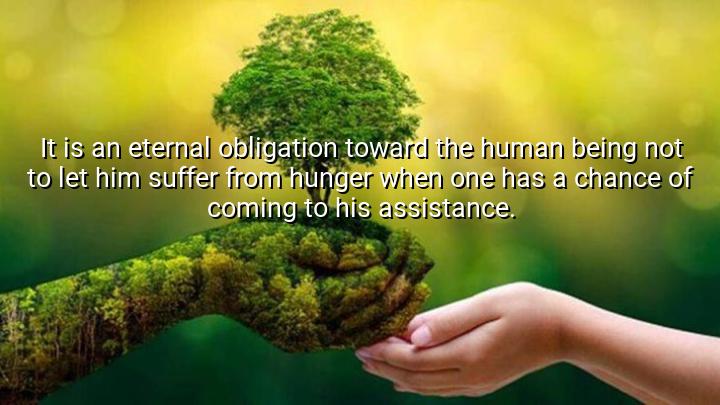




The quote "It is an eternal obligation toward the human being not to let him suffer from hunger when one has a chance of coming to his assistance" by Simone Weil emphasizes the moral responsibility to alleviate suffering when one has the means to do so. Weil, a French philosopher and political activist, argues that humanity’s duty to help others, especially those in dire need like the hungry, is a fundamental and universal obligation. The use of the word "eternal" suggests that this responsibility is timeless and applies to all individuals across generations.
Weil’s words reflect her belief in the importance of compassion, justice, and human dignity. She believed that helping others in need, particularly by addressing basic needs like food, is one of the most direct ways to uphold human values and foster a just society. The quote implies that if someone has the ability to relieve the suffering of others, they have a moral imperative to do so, especially in cases of hunger, which is a basic and urgent need.
The origin of this quote is deeply tied to Weil’s philosophical and political views. Throughout her life, she was committed to addressing social inequalities and human suffering. Her experiences as a factory worker, her activism during the Spanish Civil War, and her intellectual contributions all led her to explore the moral and ethical responsibilities individuals have toward one another, particularly in times of crisis. For Weil, the suffering of others was not something to be ignored or justified, but a call to action for solidarity and compassion.
Ultimately, Weil’s quote highlights the importance of not only recognizing human suffering but actively engaging in efforts to end it, especially when one has the capacity to help. It serves as a reminder that basic human rights, like access to food, should be protected for all, and that individuals have a duty to aid those who are vulnerable or in need, ensuring that no one suffers from hunger when assistance is possible.

AAdministratorAdministrator
Welcome, honored guests. Please leave a comment, we will respond soon