

In this country, the health concerns and the environmental concerns are as deep as in Europe. All the surveys show that. But here, we didn't have the cultural dimension. This is a fast-food culture.
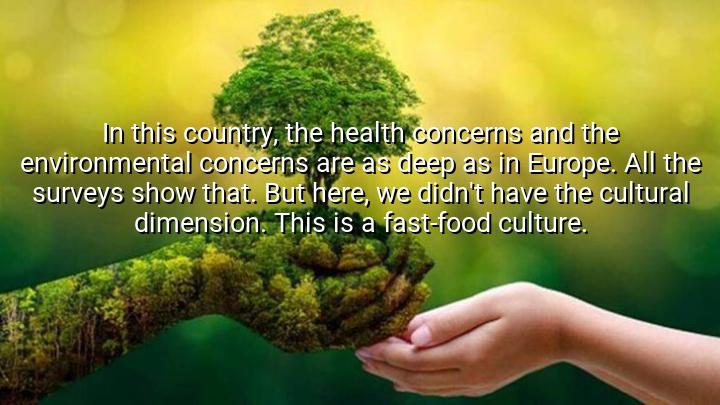




In this quote, Jeremy Rifkin points out that health concerns and environmental concerns in the United States are just as significant as they are in Europe. However, he notes a crucial difference: in the U.S., these issues lack the cultural dimension that often accompanies them in Europe. Rifkin suggests that the American culture is shaped by fast-paced, consumer-driven habits, often epitomized by the fast-food culture, which focuses on convenience and speed rather than deep engagement with social or environmental issues. This contrast highlights how culture can influence how seriously society addresses pressing concerns.
Rifkin’s mention of the fast-food culture in the U.S. is a metaphor for a broader societal pattern where convenience and instant gratification often take precedence over long-term planning or more sustainable practices. While European countries may integrate health and environmental sustainability into their cultural values and day-to-day life, Rifkin argues that in the U.S., there is a tendency to approach these issues more reactively and less thoughtfully. This, he implies, leads to slower progress in addressing the underlying causes of these concerns.
The origin of this quote lies in Rifkin's work as an economist and social theorist, particularly his focus on the impact of technological change and consumer culture. As an advocate for a more sustainable future, Rifkin has often commented on the disconnect between the urgent need for environmental action and the pace of change in societies, especially in the United States. His analysis highlights the tension between progress and cultural values, which can sometimes hinder more significant efforts toward addressing global challenges.
Ultimately, Rifkin’s quote draws attention to the role that culture plays in shaping how societies confront critical issues. It calls for a shift in cultural values, advocating for a deeper, more thoughtful approach to both health and environmental concerns—one that prioritizes long-term sustainability over immediate gratification.

AAdministratorAdministrator
Welcome, honored guests. Please leave a comment, we will respond soon