

In these dangerous times, where it seems the world is ripping apart at the seams, we can all learn how to survive from those who stare death squarely in the face every day, and we should reach out to each other and bond as a community, rather than hide from the terrors of life at the end of the millennium.
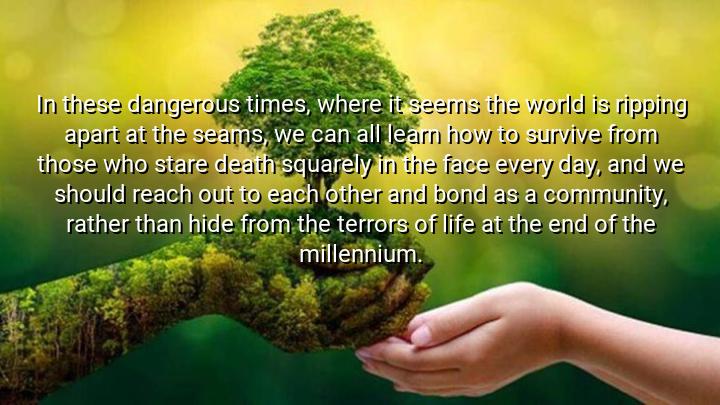




Jonathan Larson’s quote, “In these dangerous times, where it seems the world is ripping apart at the seams, we can all learn how to survive from those who stare death squarely in the face every day, and we should reach out to each other and bond as a community, rather than hide from the terrors of life at the end of the millennium,” speaks to the need for resilience and solidarity in the face of adversity. Larson, known for his work on the musical Rent, emphasizes that in times of crisis—whether it be social, political, or personal—looking to those who face life-threatening challenges can offer valuable lessons in survival and courage. The quote also suggests that community support is essential to navigating tough times, instead of retreating in fear or isolation.
The mention of “death squarely in the face” likely refers to the struggles of marginalized communities or individuals dealing with life-threatening situations, such as those living with HIV/AIDS, which was a central theme in Rent. Larson himself was an advocate for these communities and often wrote about the courage of those facing death and societal rejection. In the context of the quote, it reflects the idea that, even in the darkest of times, people can learn from the strength and resilience of others who confront death daily.
Larson’s words also encourage connection and community-building. Instead of withdrawing in fear, he urges people to come together, acknowledging that shared experience and collective support are crucial for overcoming the challenges of a rapidly changing world. His call to “bond as a community” reflects his belief in the power of unity and empathy, values that were central themes in Rent, where characters support each other through hardship and loss.
Ultimately, the quote emphasizes hope and solidarity as powerful tools for survival in tumultuous times. Larson’s perspective encourages individuals to find strength in each other, particularly when the world feels like it’s unraveling. It serves as a reminder that, even in moments of crisis, human connection and shared resilience can provide a path forward.

AAdministratorAdministrator
Welcome, honored guests. Please leave a comment, we will respond soon