

In the long run, your human capital is your main base of competition. Your leading indicator of where you're going to be 20 years from now is how well you're doing in your education system.
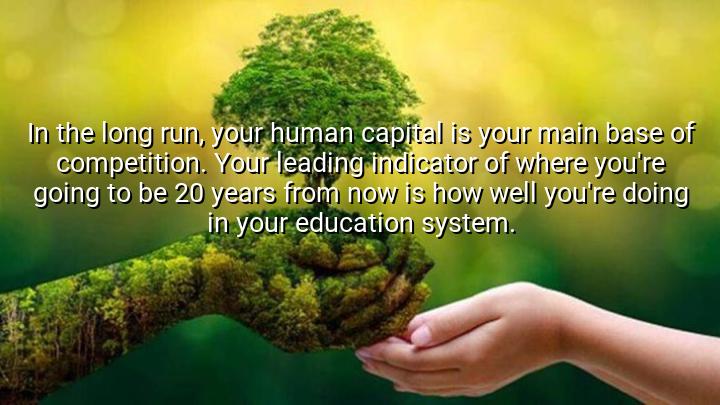




The quote by Bill Gates, “In the long run, your human capital is your main base of competition. Your leading indicator of where you’re going to be 20 years from now is how well you’re doing in your education system”, emphasizes the central role of people and knowledge in driving progress. Gates highlights that while technology, money, or resources are important, a nation’s true strength lies in its human capital—the skills, creativity, and innovation of its people. The education system is the foundation that develops this capital and determines long-term success.
The origin of this statement stems from Gates’ extensive involvement in global education initiatives through the Bill & Melinda Gates Foundation. For decades, he has advocated for reforming schools, improving teaching standards, and making higher learning accessible, particularly in underserved communities. His experiences in building Microsoft also taught him that the ability to attract and nurture talented individuals is the ultimate driver of competition in business and society alike.
By calling education a “leading indicator,” Gates frames it as a predictive measure of the future. A strong education system today translates into skilled workers, informed citizens, and innovative leaders tomorrow. Conversely, neglecting education results in stagnation and decline, as nations or companies without well-developed human capital cannot remain competitive in a global economy.
Ultimately, Gates’ quote is both a warning and a roadmap. He underscores that investing in education is not just about personal growth but about securing long-term prosperity and global relevance. The true measure of where a society will stand decades from now depends less on current wealth and more on how well it cultivates its most valuable resource: its people.

AAdministratorAdministrator
Welcome, honored guests. Please leave a comment, we will respond soon