

I'm not everybody's cup of tea. But sometimes criticism can be hurtful. Be respectful. I'm a good piano player, I can sing well, I write good songs. If you don't like it, fair enough. But give me a break.
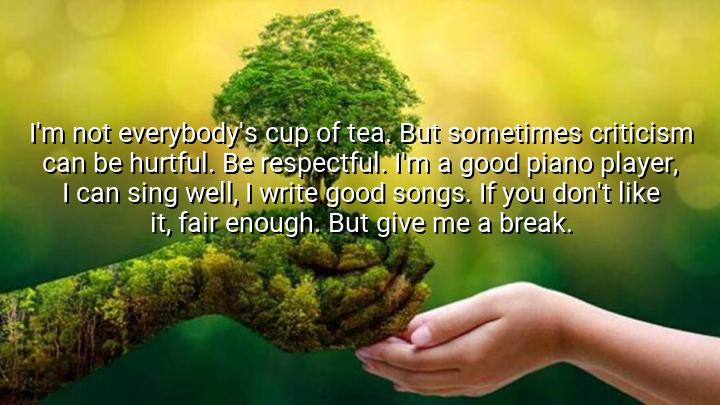




The quote, "I'm not everybody's cup of tea. But sometimes criticism can be hurtful. Be respectful. I'm a good piano player, I can sing well, I write good songs. If you don't like it, fair enough. But give me a break," reflects Elton John’s honest expression of self-worth and individuality. As a legendary musician and performer, John acknowledges that his art and personality may not appeal to everyone, yet he emphasizes the importance of respect in interactions and criticism. He asserts his talents in piano, singing, and songwriting while asking for a fair and considerate attitude from others.
The origin of this quote comes from Elton John’s candid reflections on fame and public scrutiny. Throughout his career, he has experienced both widespread acclaim and harsh criticism, often due to his unique style, flamboyant persona, and creative choices. This statement highlights his belief that while criticism is inevitable, it should be tempered with courtesy and understanding, especially when evaluating someone’s genuine abilities and hard work.
At its core, the quote conveys the importance of self-confidence and resilience. John encourages individuals to embrace their strengths and achievements without being overly affected by negative opinions. By saying, “If you don’t like it, fair enough,” he demonstrates grace and maturity, recognizing that personal taste varies while maintaining pride in his craft.
Ultimately, this quote serves as both a defense of artistic expression and a reminder of the value of respectful communication. Elton John’s words inspire others to stand firm in their talents and individuality, while also promoting a culture of kindness and fairness when offering criticism or judgments about others.

AAdministratorAdministrator
Welcome, honored guests. Please leave a comment, we will respond soon