

If your heart is a volcano, how shall you expect flowers to bloom?
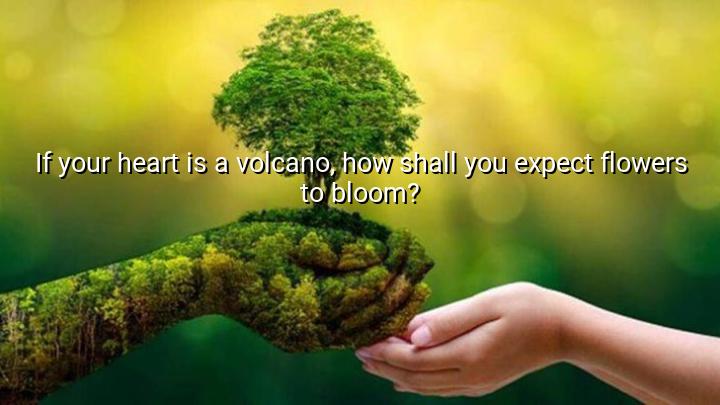




The quote by Khalil Gibran, “If your heart is a volcano, how shall you expect flowers to bloom?”, uses vivid metaphor to explore the connection between emotional state and personal growth. By comparing a volatile heart to a volcano, Gibran suggests that anger, bitterness, or uncontrolled emotions can prevent the gentle, nurturing qualities of love, kindness, and creativity from flourishing. The imagery of flowers represents the beauty, growth, and positive outcomes that arise when the heart is calm, open, and fertile.
The origin of this quote lies in Gibran’s work as a Lebanese-American poet, philosopher, and artist, most famous for his book The Prophet. Gibran often explored spiritual wisdom, human emotions, and the inner life, using poetic and symbolic language to convey deep truths. This quote reflects his belief that the state of one’s heart directly influences the life one creates and the relationships one nurtures.
Beyond the literal meaning, the quote emphasizes the importance of self-awareness and emotional regulation. Gibran implies that harboring intense negativity or uncontrolled passion can hinder the ability to experience joy, love, and growth. By addressing the heart’s condition, he encourages readers to cultivate patience, compassion, and openness, creating fertile ground for positive transformation.
Ultimately, the quote celebrates the idea that inner harmony fosters outward beauty. Gibran reminds us that for love, creativity, and happiness to flourish, one must first tend to the emotional climate within oneself. The message is a timeless reflection on the interplay between inner life and the world we create, urging careful nurturing of the heart to allow life’s flowers to bloom.

AAdministratorAdministrator
Welcome, honored guests. Please leave a comment, we will respond soon