

If you read enough biography and history, you learn how people have dealt successfully or unsuccessfully with similar situations or patterns in the past. It doesn't give you a template of answers, but it does help you refine the questions you have to ask yourself.
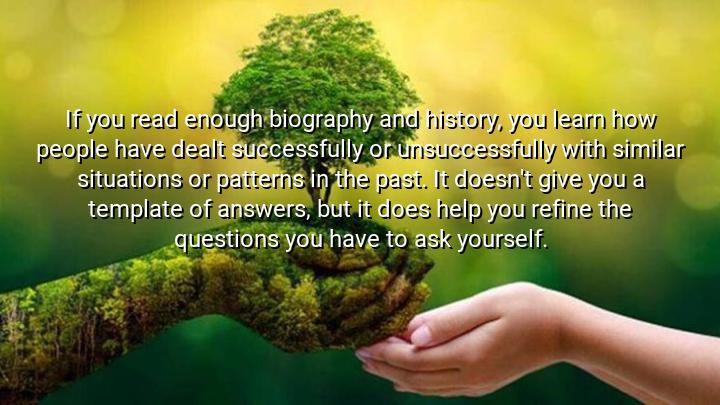




The quote by Jim Mattis emphasizes the importance of studying biography and history as tools for personal and professional growth. He explains that by examining how people in the past have handled similar situations or patterns, we can gain insights into human behavior, leadership, and decision-making. While history doesn’t provide ready-made solutions, it offers valuable lessons about successes and failures that can guide our own thinking.
Mattis stresses that the value of history lies not in delivering a template of answers but in helping us refine the questions we ask ourselves. This reflects a belief that wisdom comes not from copying the past but from using it as a guide to frame challenges more clearly. Good decision-making, therefore, depends less on having the “right answer” and more on asking the right questions—something historical study can sharpen.
This perspective also aligns with Mattis’s broader philosophy of lifelong learning and disciplined reflection. As a military leader, he understood that situations in war and life are often complex and unpredictable. By immersing himself in history and biography, he sought to broaden his mental toolkit, ensuring that when faced with difficult choices, he could draw on the accumulated experience of others to navigate uncertainty.
The origin of this quote lies in Mattis’s role as a highly respected U.S. Marine Corps general and later Secretary of Defense. Known as the “Warrior Monk” for his intellectual curiosity, he often carried a vast personal library and urged younger officers to read widely. This quote encapsulates his belief that history is a living resource, not for rote answers, but for cultivating the clarity and perspective needed to confront modern challenges.

AAdministratorAdministrator
Welcome, honored guests. Please leave a comment, we will respond soon