

If we don't know life, how can we know death?
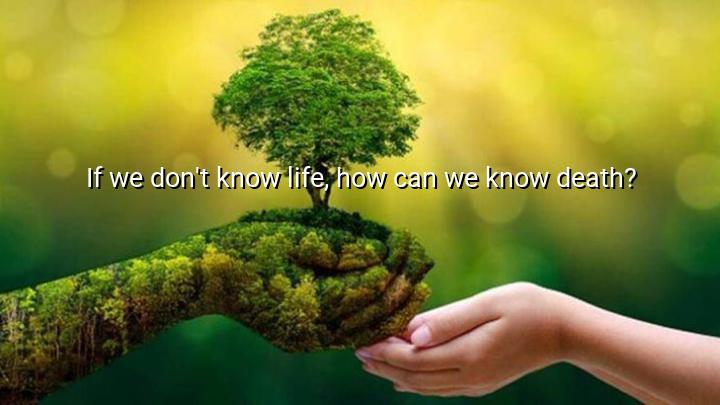




Confucius’ quote, "If we don't know life, how can we know death?" suggests that our understanding of life is essential to fully comprehend the concept of death. Confucius implies that without a deep understanding of what it means to live—through experiences, relationships, and personal growth—we cannot truly grasp the significance of death. Life and death are intricately connected, and by examining how we live, we can gain insights into how we approach and understand death. The quote encourages a reflective, thoughtful approach to life, where one’s choices, actions, and values are closely linked to how they perceive the end of life.
The quote also speaks to the philosophical and spiritual dimensions of existence. Confucius often emphasized the importance of understanding the nature of life, including our responsibilities, duties, and relationships with others. Only by living a thoughtful, ethical life can we come to terms with death, accepting it not as something to be feared, but as a natural part of the cycle of existence. It suggests that living in alignment with virtue and wisdom helps prepare us for death, ensuring that we face it with understanding and peace.
Moreover, Confucius’ teaching here reflects his broader philosophy, which emphasizes the importance of education, self-reflection, and inner harmony. To truly understand the impermanence of life and the inevitability of death, one must first explore and appreciate life in all its complexities. Through this understanding, a person can approach death not with dread, but with acceptance, grace, and a sense of fulfillment.
The origin of this quote comes from Confucius, a Chinese philosopher and educator whose teachings have influenced Eastern philosophy for centuries. His ideas on ethics, morality, and social harmony focus on the interdependence of all things, including life and death. This quote encapsulates his belief that true wisdom comes from a deep understanding of the world around us, and by living with awareness, we can face life’s challenges—including death—with clarity and understanding.

AAdministratorAdministrator
Welcome, honored guests. Please leave a comment, we will respond soon