

If this is coffee, please bring me some tea; but if this is tea, please bring me some coffee.
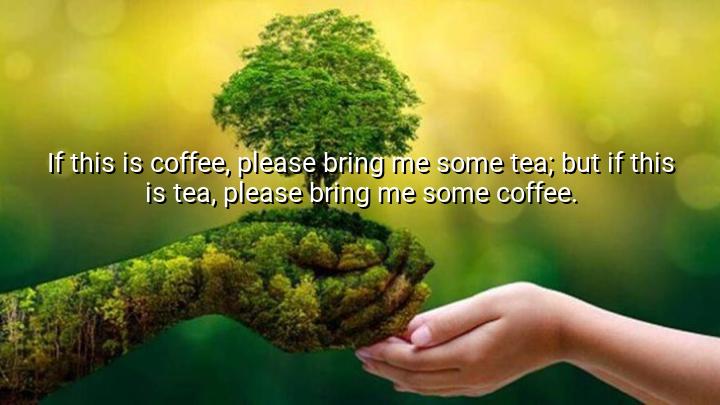




The quote "If this is coffee, please bring me some tea; but if this is tea, please bring me some coffee" by Abraham Lincoln humorously illustrates the idea of someone being uncertain about what they truly want, or possibly expressing a desire for variety. Lincoln plays with the notion of personal preference, showing a lighthearted confusion about coffee and tea, two beverages often viewed as polar opposites in terms of taste and cultural association. The humor comes from the idea of someone rejecting one option only to request the other, regardless of the situation.
The quote is often interpreted as a reflection of Lincoln's witty and sometimes paradoxical nature. Known for his humor and self-deprecating wit, Lincoln often used playful sayings to defuse tension and engage with people on a more personal level. The quote may also reflect his tendency to approach life’s complexities with simplicity and humor, rather than rigid expectations or preferences.
In the context of coffee and tea, the quote can also symbolize the idea that people are often caught between two choices, uncertain of which one they truly desire. It can be read as a commentary on how individuals sometimes feel torn between options and are unable to make a definitive choice. Lincoln's words reveal that, in some instances, it doesn’t matter which option is chosen, as the desire for one may always be followed by a desire for the other, illustrating the complexity of personal preferences.
Ultimately, this quote exemplifies Lincoln's use of humor to address the paradoxes of everyday life. By making light of something as simple as coffee versus tea, Lincoln offers a moment of levity while also subtly exploring the fluid nature of decision-making and the sometimes fickle nature of human desire. The quote remains an enduring example of Lincoln's ability to blend humor with insight into human nature.

AAdministratorAdministrator
Welcome, honored guests. Please leave a comment, we will respond soon