

If there are more and more environmental refugees, they are going to end up on your doorstep too.
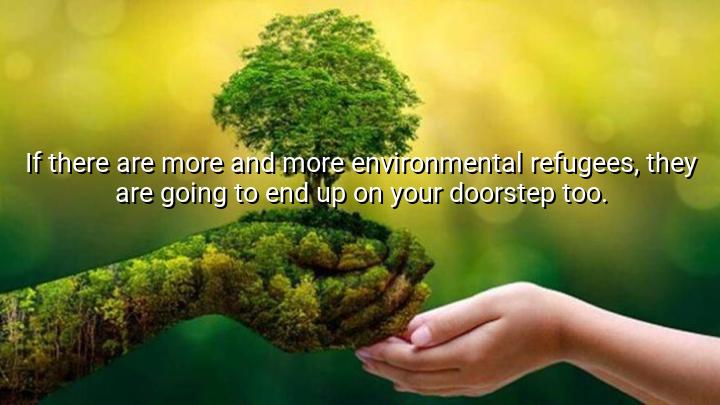




Nina Fedoroff’s quote, “If there are more and more environmental refugees, they are going to end up on your doorstep too,” warns about the global consequences of environmental degradation. Fedoroff is highlighting the growing issue of climate change and its role in displacing populations, leading to the rise of environmental refugees—people forced to leave their homes due to factors like rising sea levels, extreme weather events, or land degradation. The quote suggests that as climate-related crises intensify, the burden of these displaced populations will eventually affect even those who may not immediately face the same environmental pressures, warning of the global interconnectedness of the issue.
The term environmental refugees refers to individuals or communities displaced not by political conflict but by the effects of environmental changes such as flooding, drought, or natural disasters exacerbated by climate change. Fedoroff implies that these refugees will seek refuge in more stable regions, putting pressure on political systems, economies, and social services in countries that may not have the infrastructure to accommodate them. The growing numbers of environmental refugees are a symptom of the broader crisis that could ultimately impact the entire world.
Fedoroff's quote serves as a call to action for addressing climate change before its consequences become even more severe. The suggestion that these refugees will "end up on your doorstep" serves as a stark reminder that climate change is a global problem, and its effects are not confined to any one nation or region. Everyone, regardless of location, will eventually feel the economic, social, and political ramifications of climate-induced displacement.
In summary, Nina Fedoroff’s quote underscores the urgency of addressing environmental degradation and climate change, particularly in the context of environmental refugees. It warns that the consequences of ignoring environmental issues will not be isolated but will eventually affect everyone, highlighting the interconnectedness of global environmental challenges. The quote urges proactive solutions to mitigate climate change and reduce the number of people displaced by it.

AAdministratorAdministrator
Welcome, honored guests. Please leave a comment, we will respond soon